Radar vs Ultrasonic Level Sensor – How to Choose the Right Technology
Radar vs Ultrasonic Level Sensor – How to Choose the Right Technology
Selecting the correct non-contact level measurement technology is critical for stable industrial operation. Radar level transmitters and ultrasonic level sensors are both widely used, but their performance varies depending on environmental conditions and application requirements.
This guide compares radar and ultrasonic level measurement technologies to help you determine the most suitable solution for your tank or silo.
-
Measuring Principle Comparison
Radar Level Measurement
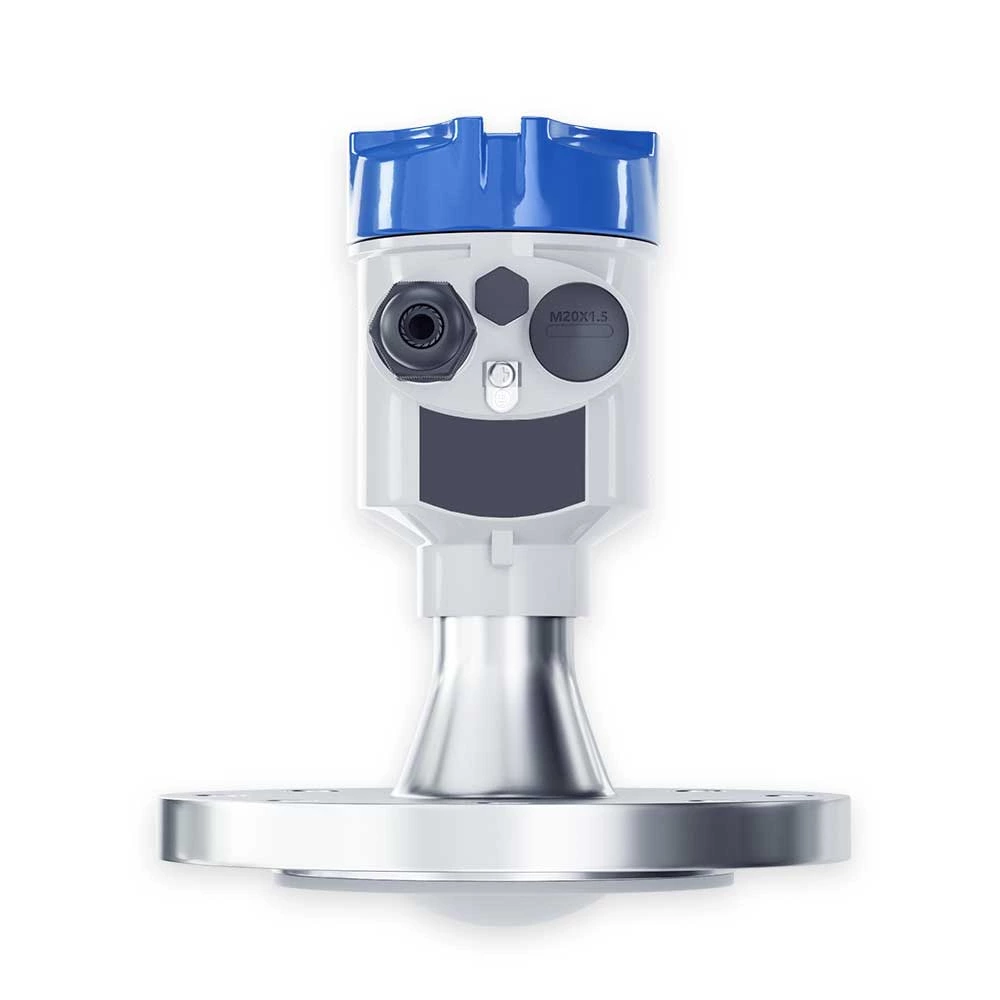
Radar level transmitters use microwave signals to measure the distance between the antenna and the medium surface. The reflected signal returns to the sensor and the time-of-flight is calculated to determine level.
Because radar uses electromagnetic waves, measurement performance is largely unaffected by temperature, pressure, vapor, or dust.
Ultrasonic Level Measurement
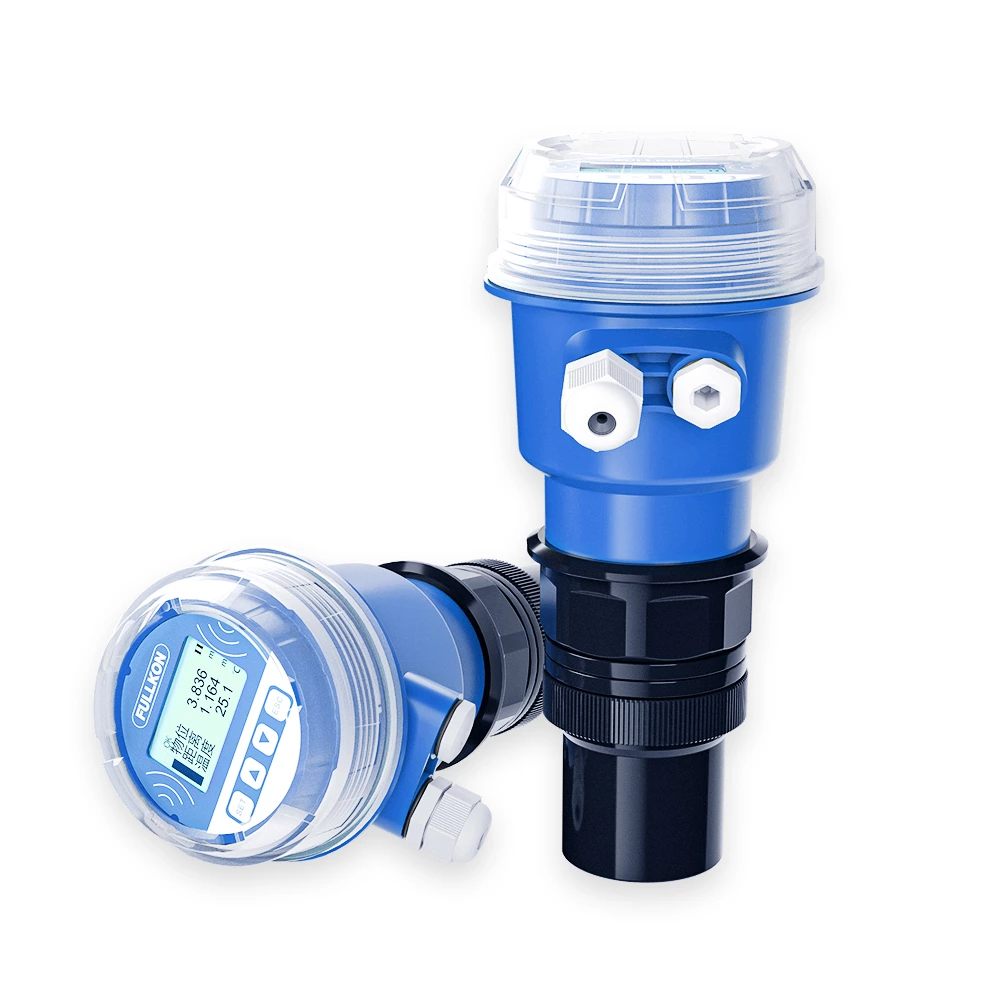
Ultrasonic level sensors emit sound pulses toward the medium surface. The reflected sound wave is used to calculate distance.
Ultrasonic technology performs well in stable environments but may be influenced by vapor, foam, and temperature fluctuations.
-
Technical Comparison Overview
| Feature | Radar Level Transmitter | Ultrasonic Level Sensor |
|---|---|---|
 |
 |
|
| Signal Type | Microwave | Sound Wave |
| Environmental Influence | Minimal impact from vapor, dust, pressure | Affected by vapor and temperature |
| High Temperature Suitability | Suitable for high temperature applications | Limited temperature tolerance |
| High Pressure Suitability | Suitable for pressurized vessels | Typically atmospheric tanks |
| Foam Resistance | Stable in foam conditions | May experience unstable readings |
| Cost Level | Higher initial investment | Lower initial investment |
-
Application-Based Selection Guide
When to Choose Radar Level Transmitter
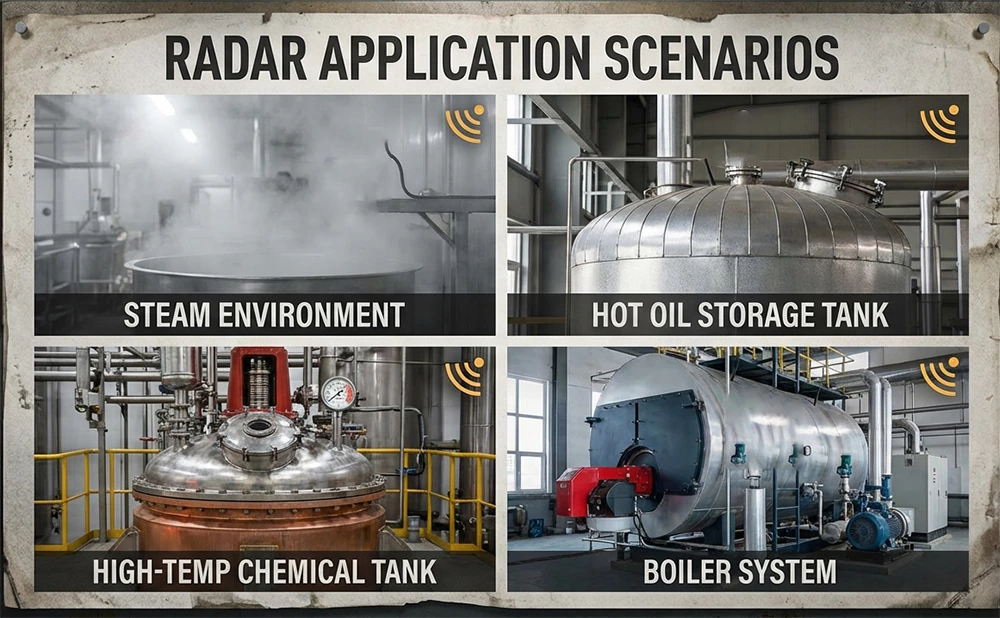
- High temperature tanks
- High pressure vessels
- Chemical or corrosive media
- Vapor or condensation present
- Foam or turbulence conditions
- Dusty silo environments
When to Choose Ultrasonic Level Sensor
- Clean water tanks
- Open tanks under atmospheric pressure
- Low temperature environments
- Budget-sensitive projects
-
Performance in Challenging Conditions
Vapor and Condensation
Radar measurement remains stable in vapor environments because electromagnetic waves are less affected by density changes. Ultrasonic signals may weaken in heavy vapor conditions.
Foam and Turbulence
Radar signals maintain stability in turbulent conditions. Ultrasonic sensors may experience signal attenuation if foam layers absorb sound waves.
Temperature Variations
Radar performance is generally independent of temperature fluctuations. Ultrasonic measurement may require compensation.
-
Cost and Long-Term Consideration
Ultrasonic sensors generally require lower initial investment. However, radar level transmitters provide enhanced stability in demanding industrial environments, potentially reducing long-term maintenance and downtime.
-
Not Sure Which Technology Is Right for You?
Provide your tank details and our engineers will recommend the most suitable solution.
- Medium type (liquid or solid)
- Tank height
- Temperature range
- Pressure condition
- Installation location
Get Free Application Advice
-
Frequently Asked Questions
Is radar more accurate than ultrasonic?
Radar typically provides higher stability in complex industrial environments.
Can ultrasonic sensors be used in high temperature tanks?
Ultrasonic sensors are generally recommended for moderate temperature applications.
Which technology is better for chemical tanks?
Radar is commonly preferred for chemical and corrosive environments.
Does foam affect level measurement?
Foam can affect ultrasonic signals more significantly than radar signals.