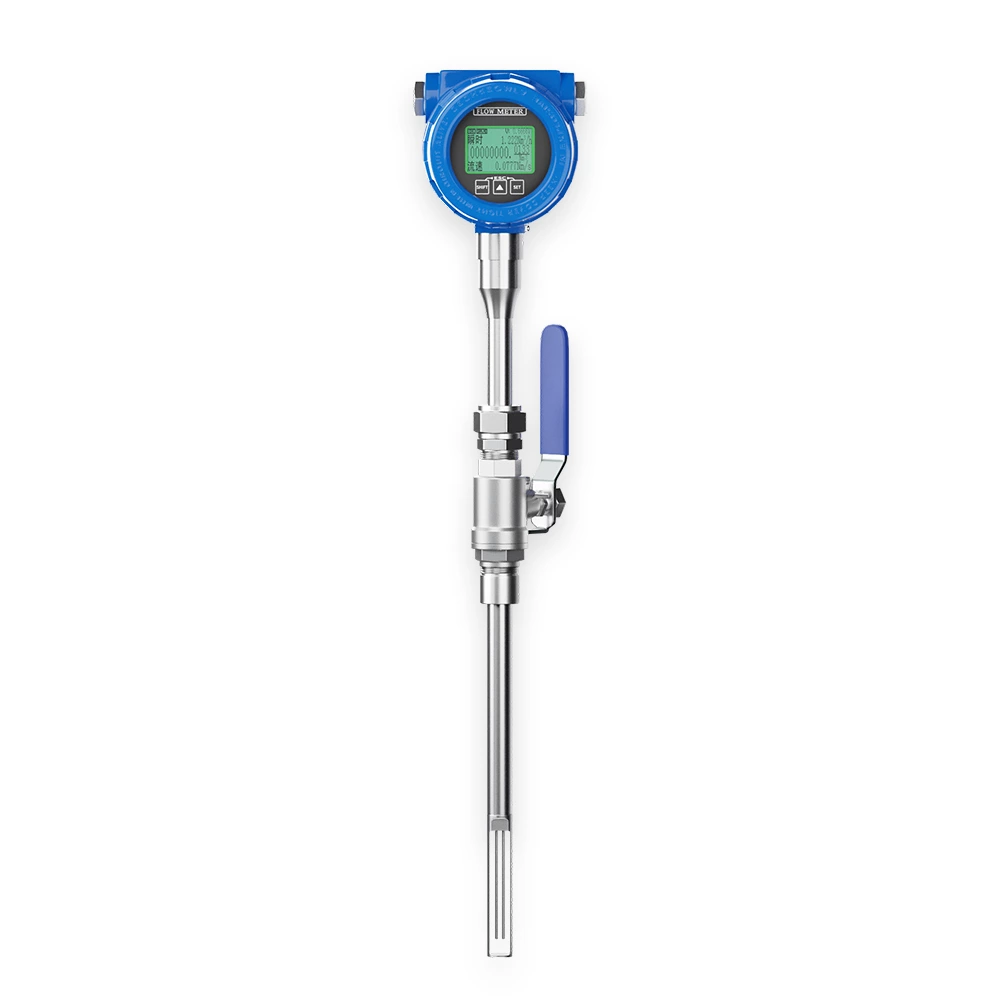
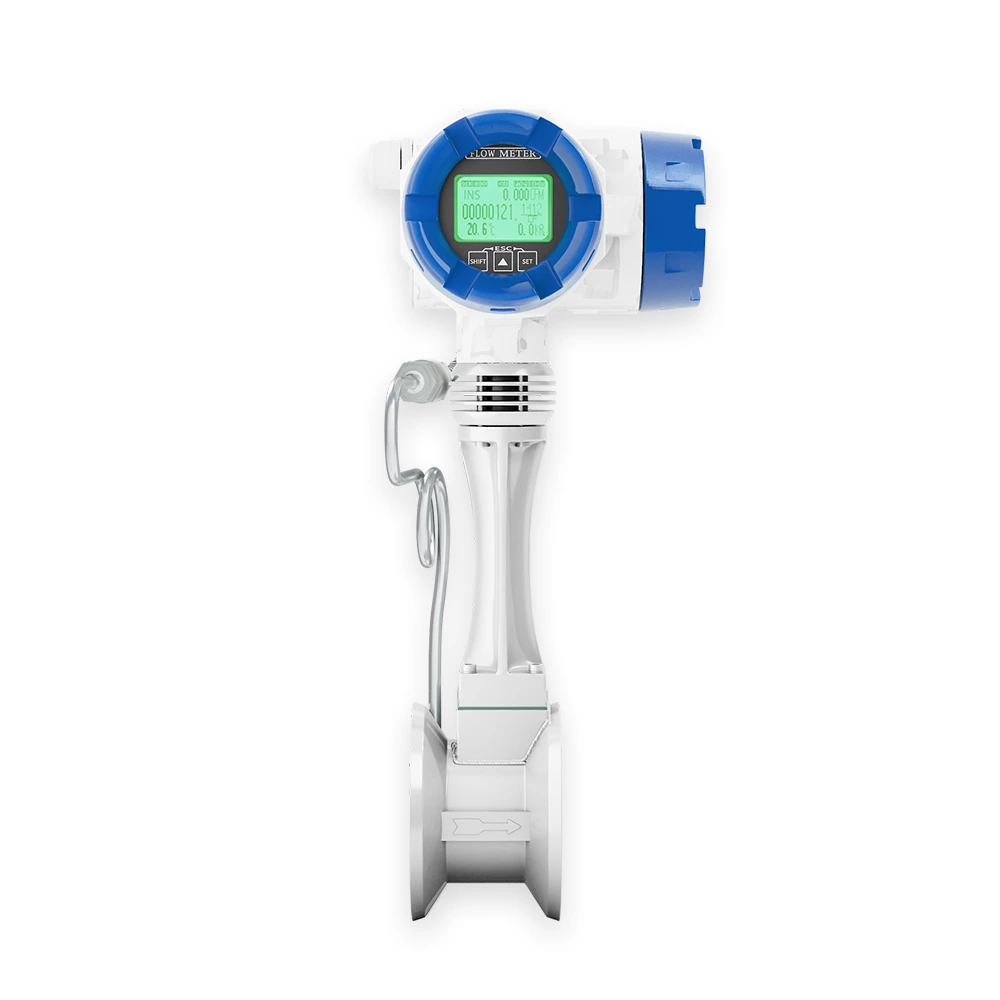
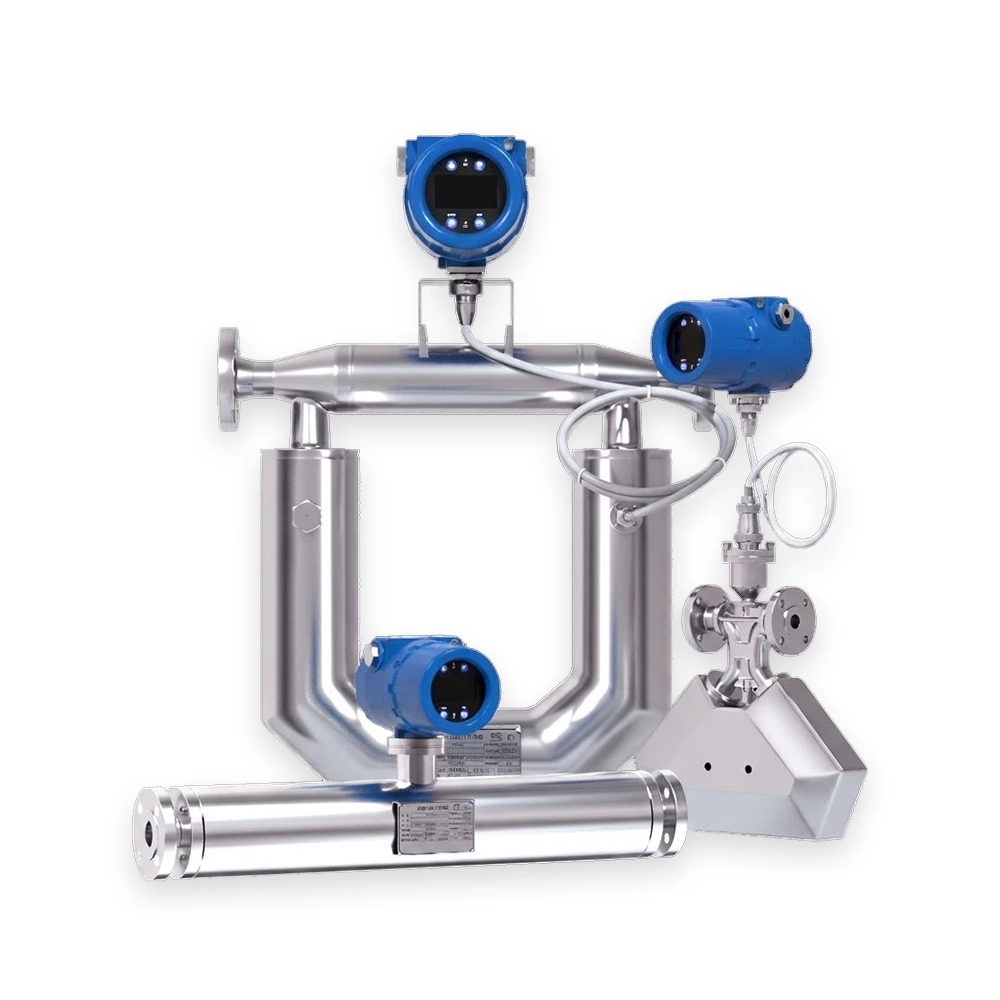
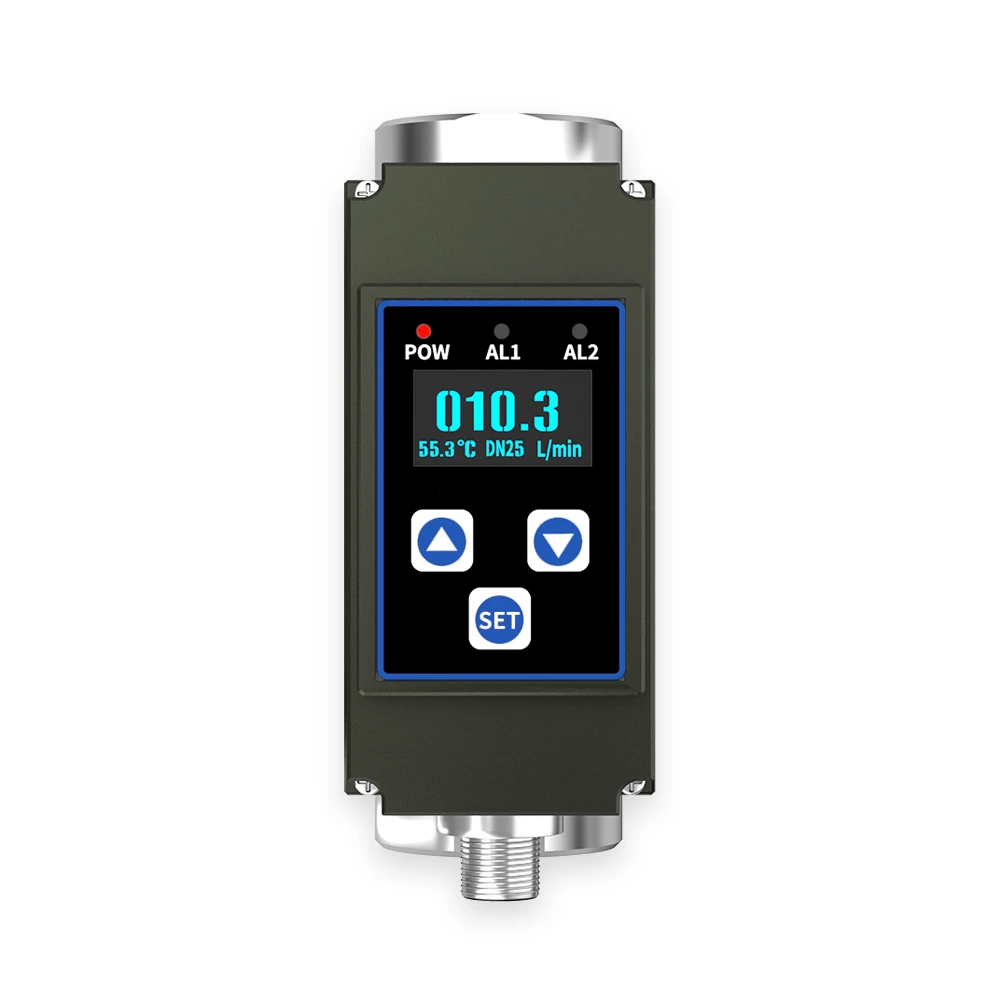
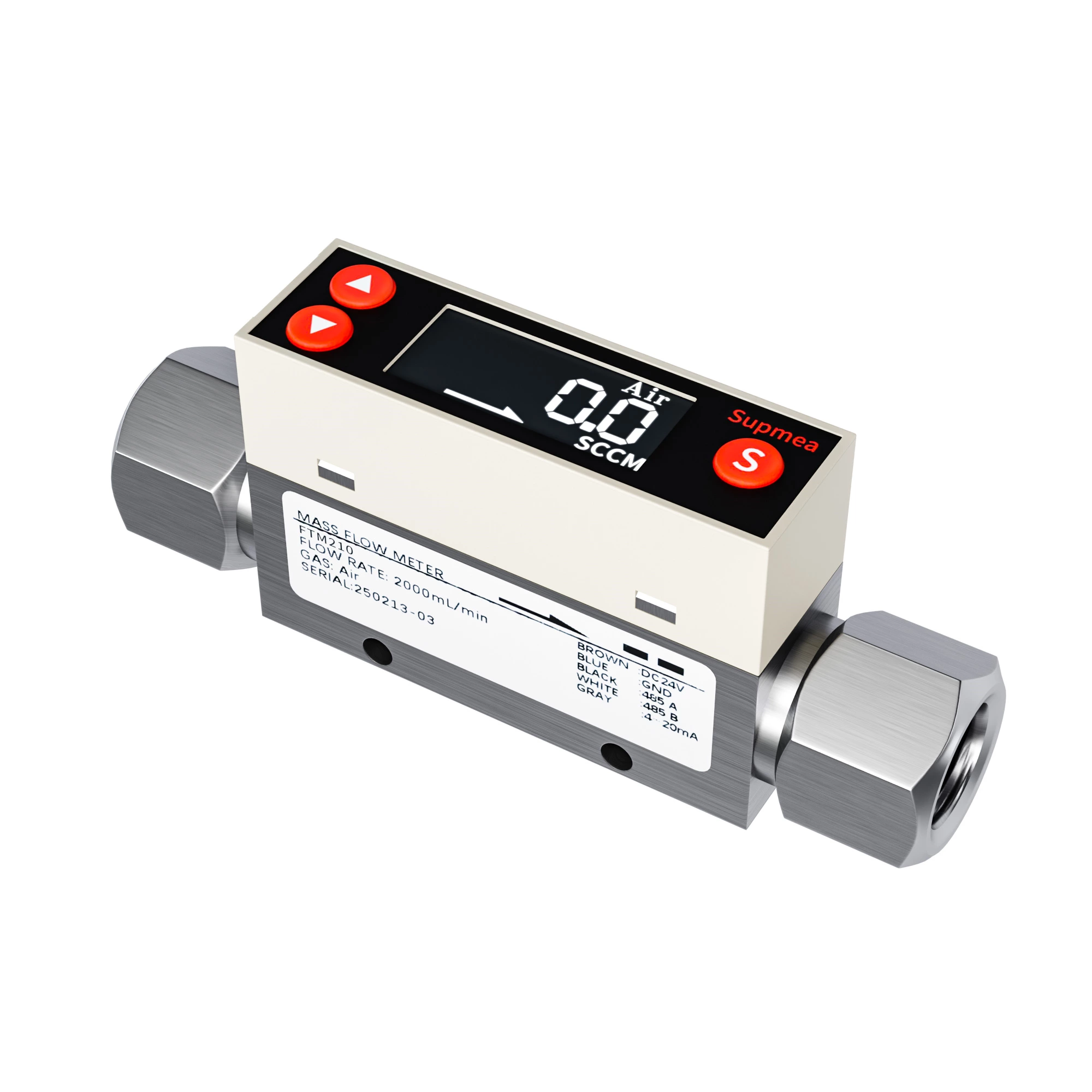
The Thermal Gas Mass Flow Meter is designed based on the thermal dispersion principle and adopts the method of constant differential temperature to measure gas flow.
The instrument integrates two platinum resistance temperature sensors and continuously monitors the cooling effect caused by gas flow passing over a heated sensor. By maintaining a constant temperature difference between the sensing and heating elements, the system determines the gas mass flow rate through the power required to sustain this temperature difference.
With small size, easy installation, high reliability and high accuracy, the meter is suitable for a wide range of industrial gas flow measurement applications.
Direct Gas Mass Flow Measurement – Measures mass flow or volume flow without the need for external temperature or pressure compensation.
Wide Measurement Range – Suitable for gas velocities from 0.1 Nm/s to 120 Nm/s, including low-flow applications and leak detection.
No Moving Parts – No mechanical moving components inside the transducer, ensuring long service life and reduced maintenance.
Excellent Vibration Resistance – No pressure sensor inside the transducer, eliminating vibration influence on measurement accuracy.
High Temperature Capability – Suitable for gas media up to 300°C.
Hot-Tap Installation Option – Under permissible site conditions, hot-tapped installation and maintenance can be achieved (custom-made special order).
Digital Intelligent Design – High accuracy, stable signal processing and reliable performance.
Industrial Communication Interfaces – Supports RS485 or HART communication for factory automation and system integration.
Compact Structure – Small size and easy installation for industrial pipelines.
-
Why Choose This Thermal Gas Mass Flow Meter
-
Reliable thermal dispersion measurement technology
-
High accuracy across wide gas velocity range
-
Long service life with no moving parts
-
Easy installation and maintenance
-
Suitable for industrial automation integration
The meter operates using the thermal dispersion method.
Inside the sensor, two platinum resistance temperature sensors are installed:
As gas flows across the heated sensor, it removes heat due to the cooling effect. The higher the gas velocity, the greater the cooling effect and the more power required to maintain the constant temperature difference.
The required heater power is proportional to the gas mass flow rate.
The relationship between gas velocity and heater power can be expressed as:
Because the sensor temperature is always maintained at approximately 30°C above the medium temperature and the meter uses constant differential temperature control, temperature and pressure compensation are not required in principle.
The Thermal Gas Mass Flow Meter is widely used in industrial gas flow measurement and monitoring systems, including:
-
Compressed air flow measurement
-
Natural gas flow monitoring
-
Industrial gas consumption measurement
-
Gas leak detection systems
-
Boiler air supply measurement
-
Combustion air monitoring
-
Ventilation and exhaust gas monitoring
-
Chemical plant gas flow control
-
Power plant gas monitoring
-
Semiconductor and industrial gas distribution systems
Its ability to directly measure gas mass flow without temperature and pressure compensation makes it particularly suitable for industrial gas management and energy efficiency monitoring.