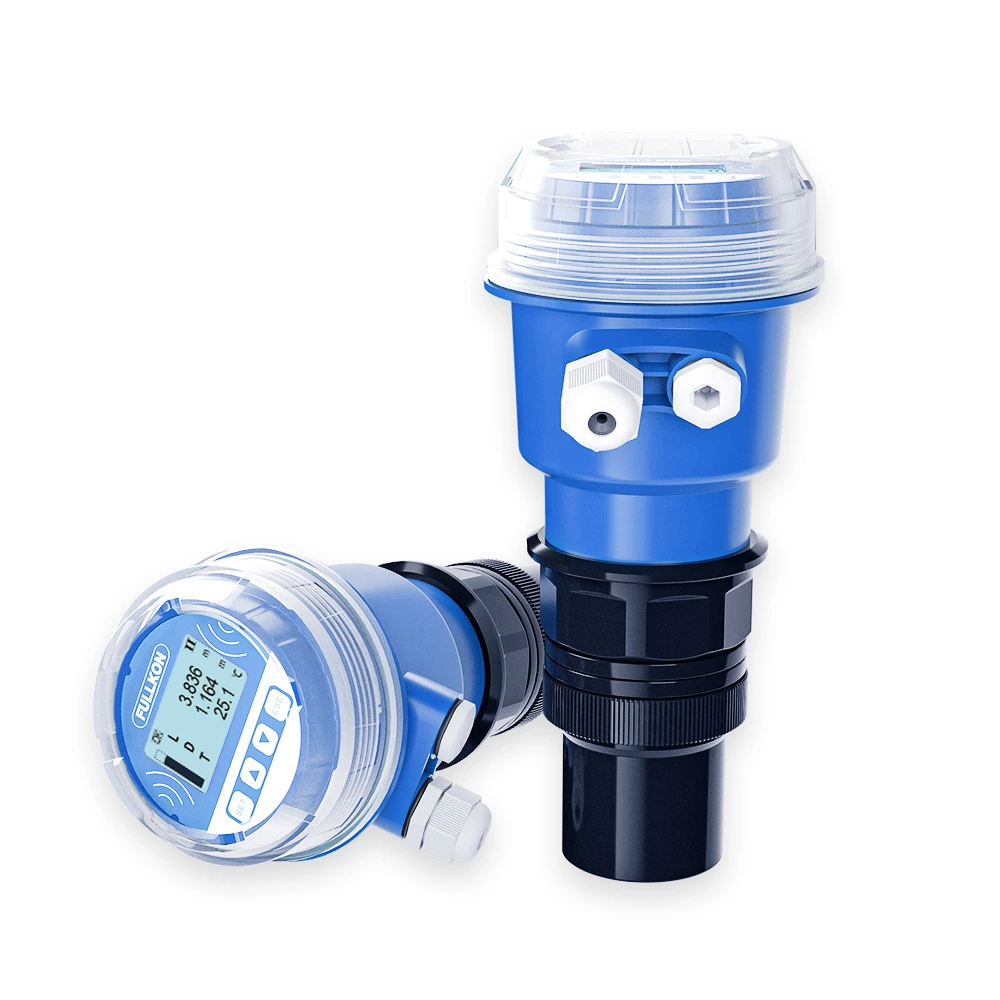
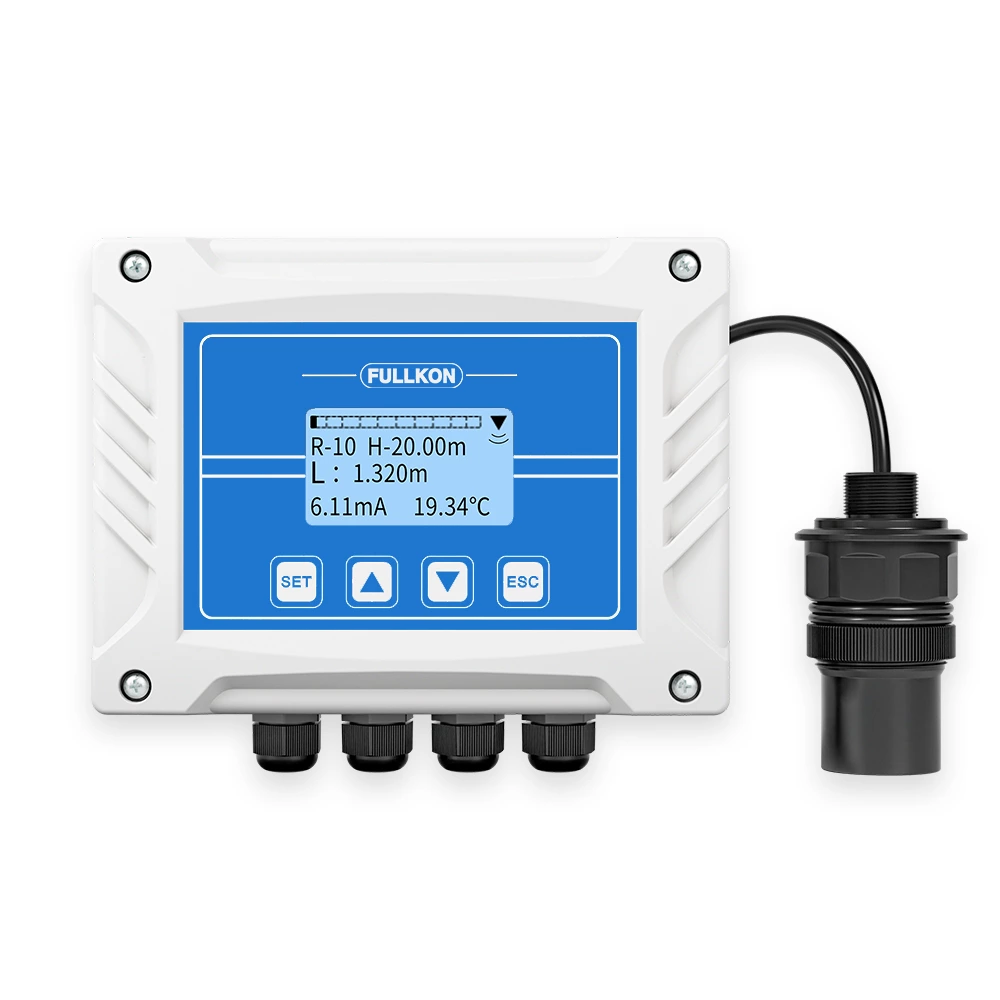
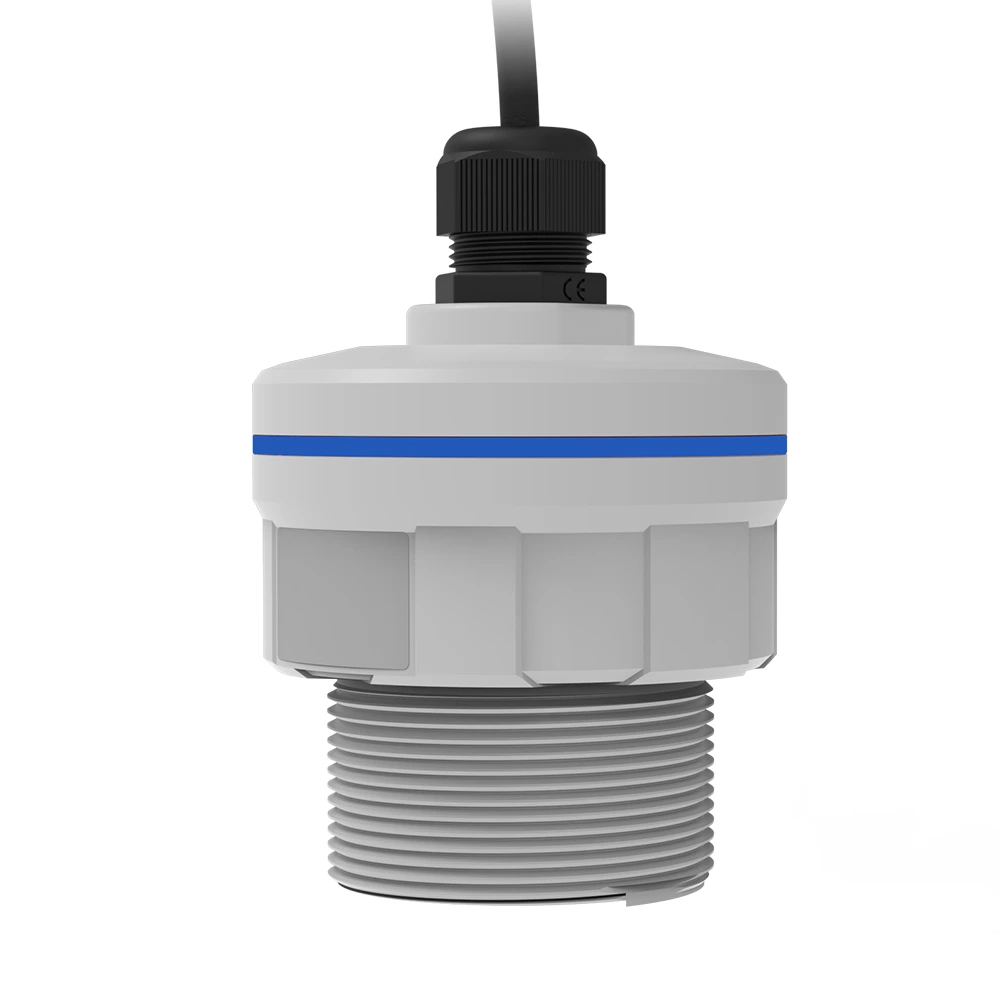
The compact ultrasonic level transmitter is a non-contact, highly reliable, and cost-effective instrument for continuous level and distance measurement of liquids and bulk materials. With its integrated structure, the sensor and display unit are housed in a single enclosure, simplifying installation and reducing wiring complexity.
The instrument is easy to install and maintain, with no direct contact with the measured medium. It is widely used in typical industrial environments such as municipal systems, chemical processing, storage and transportation facilities, and other applications including rivers, tanks, reservoirs, and silos.
Rich Chinese and English menu interface with simple operation
Built-in fault self-diagnosis for real-time status monitoring
Multiple measurement algorithms selectable for different working conditions
High measurement resolution, better than 1 mm
Fast response, with minimum response time of 2 seconds
Automatic temperature compensation, correcting sound velocity variations
Echo curve display for real-time monitoring and on-site debugging
Ultrasonic level measurement is based on the reflection of ultrasonic waves at the interface between media with different densities, such as air and liquid or solid materials.
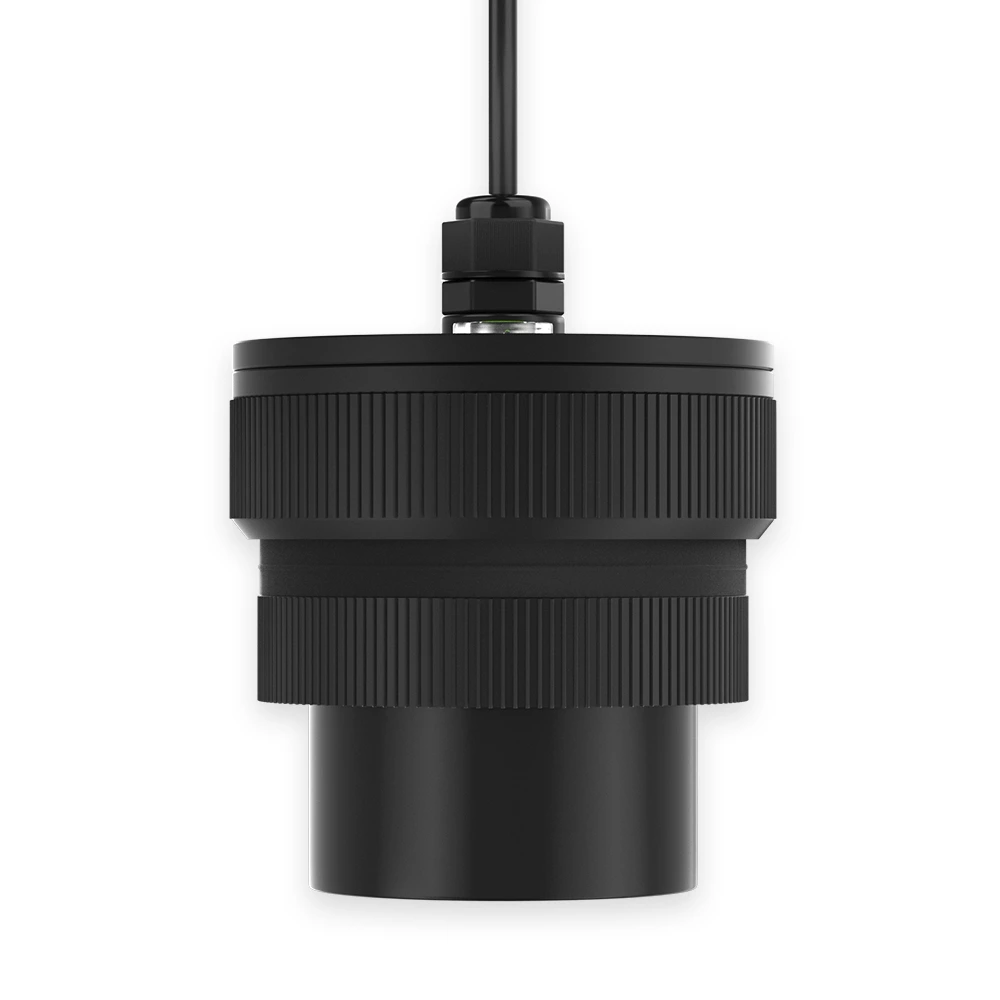
The ultrasonic transducer emits ultrasonic pulses toward the target surface. When the sound waves encounter the surface of the liquid or material, they are reflected back and received by the transducer. The instrument calculates the distance by measuring the transmission time of the ultrasonic signal.
Using the known speed of sound in air, the level or distance is accurately calculated.
Measurement parameters:
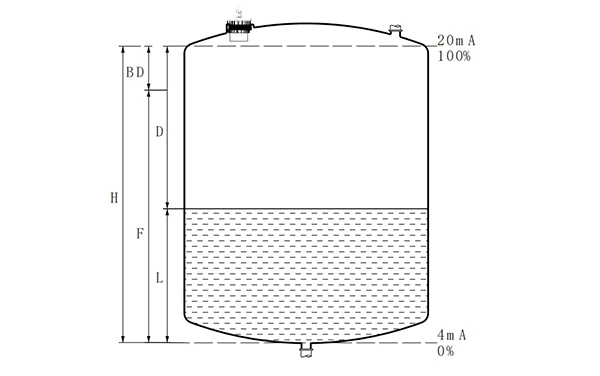
Note:
For liquid level measurement, the installation height and measurement mode must be configured via the menu.
Liquid level = Installation height − Measured distance.
The integrated ultrasonic level meter is suitable for non-contact level and distance measurement in various applications, including:
Municipal & Water Management
Rivers, reservoirs, channels, and water storage facilities
Chemical Industry
Liquid tanks, process vessels, and storage containers
Storage & Transportation
Storage tanks, silos, and bulk material containers
Industrial Process Control
Level monitoring in production and auxiliary systems
Solid Material Level Measurement
Silos, bins, and hoppers containing powders or granules
 Model Selection