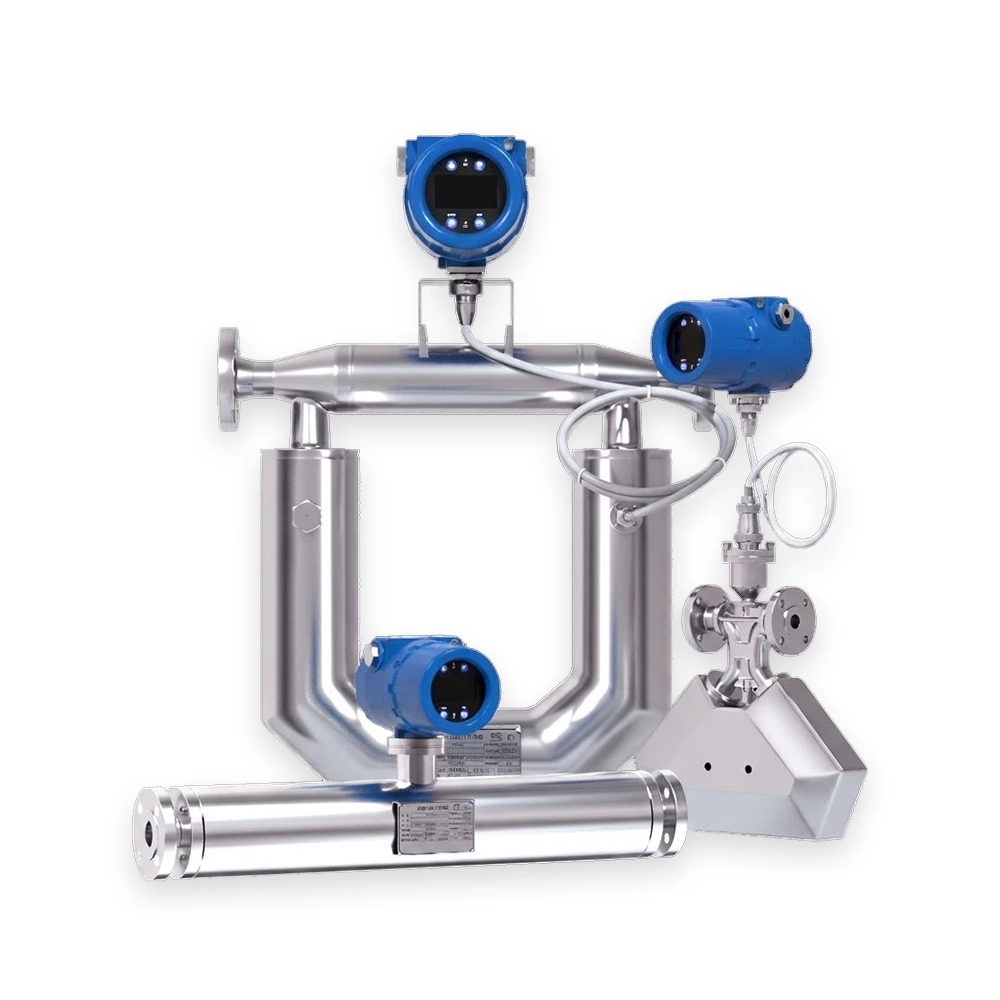
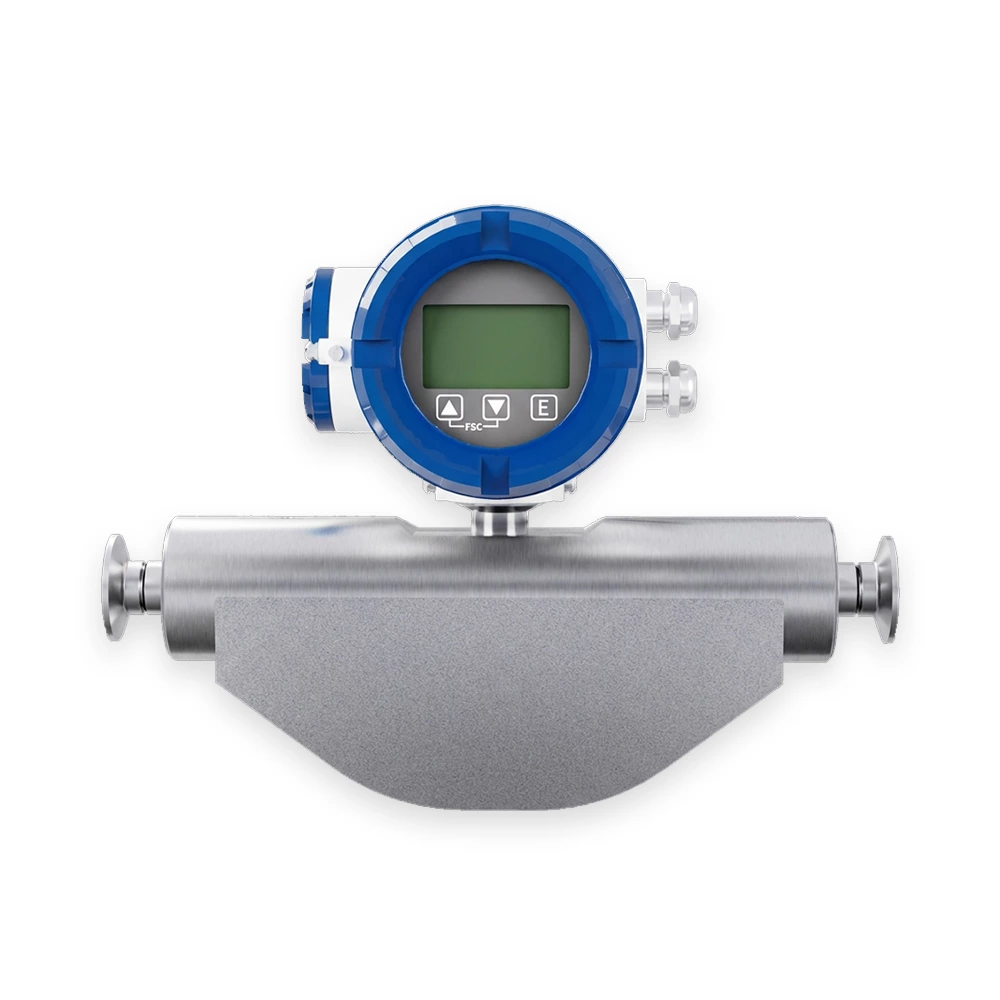
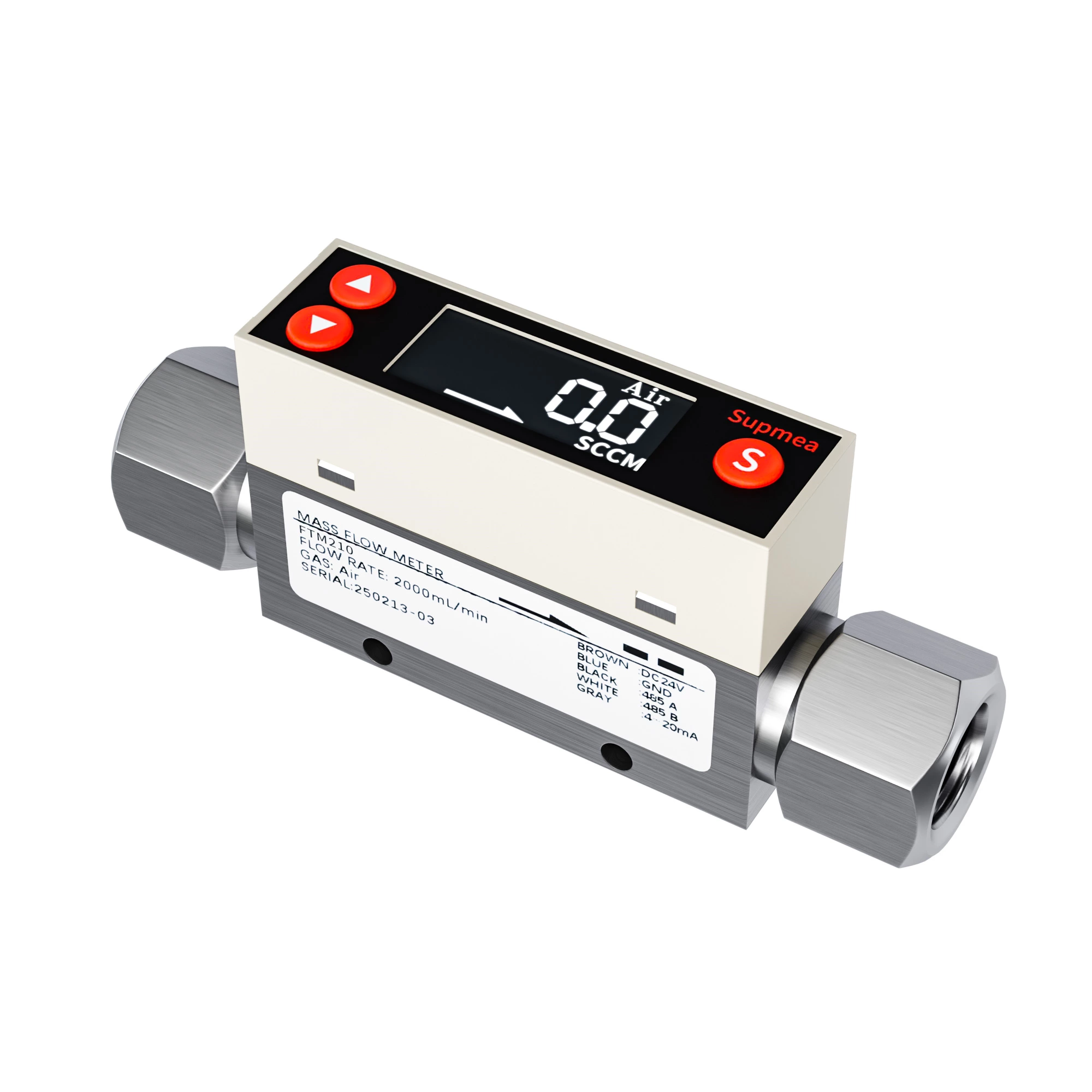
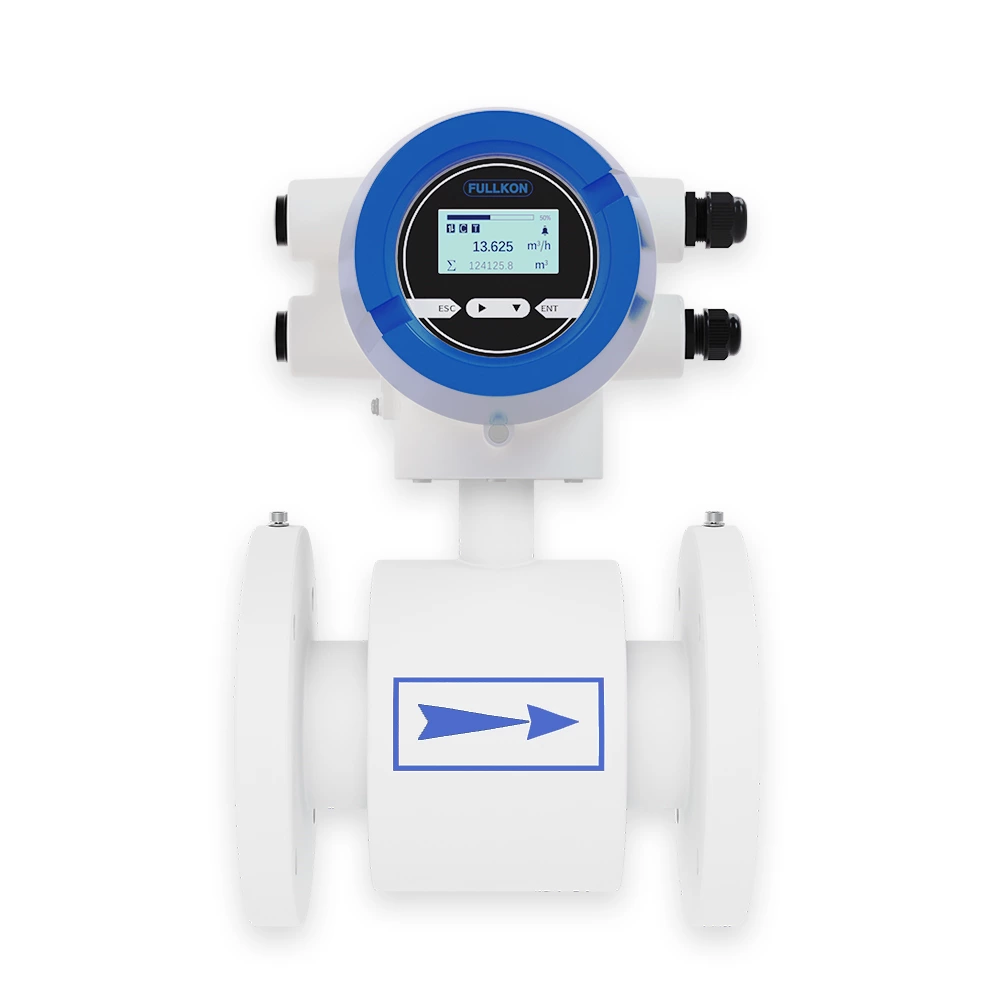
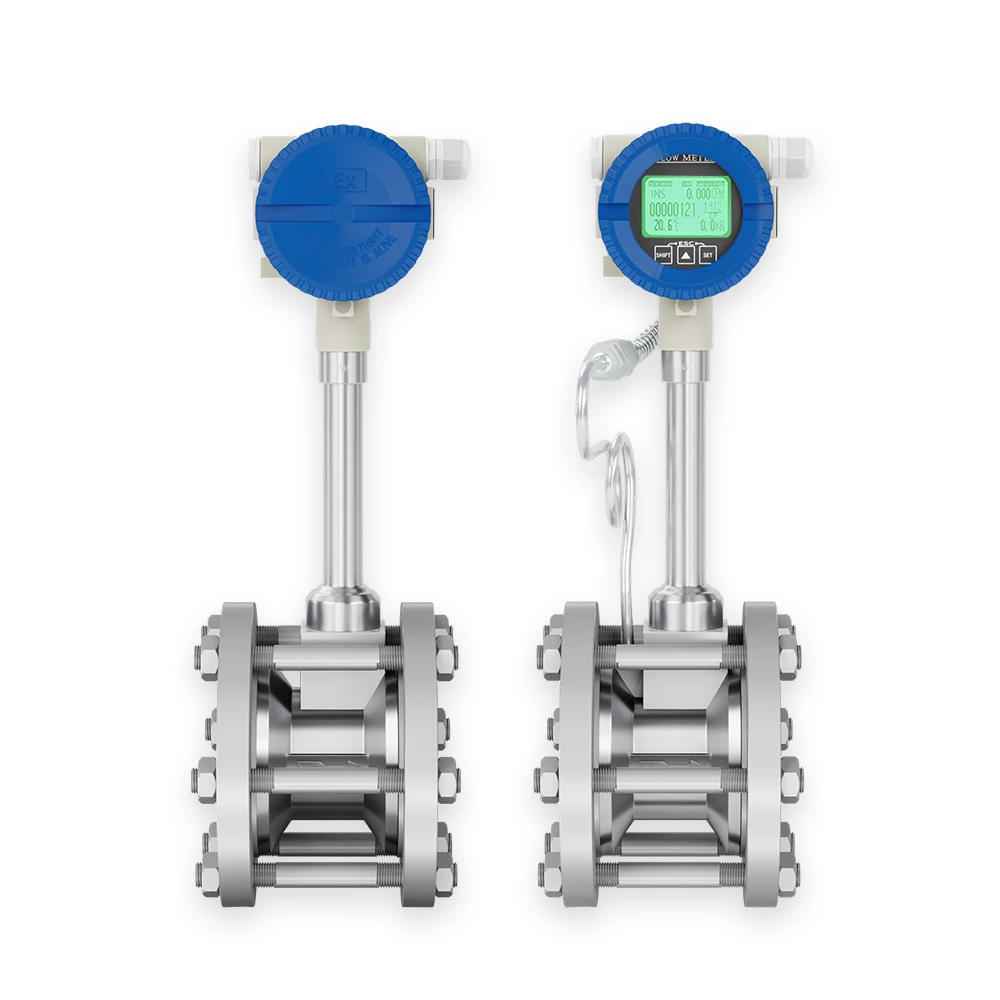
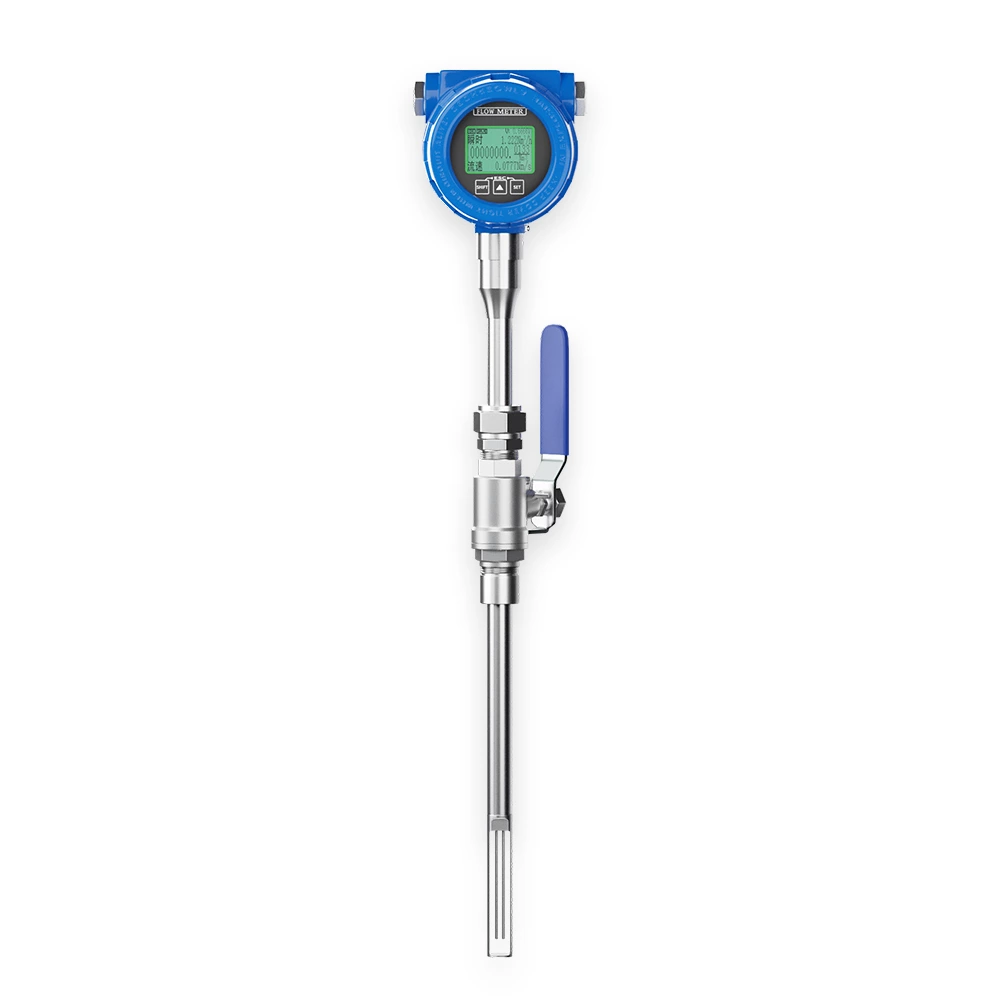
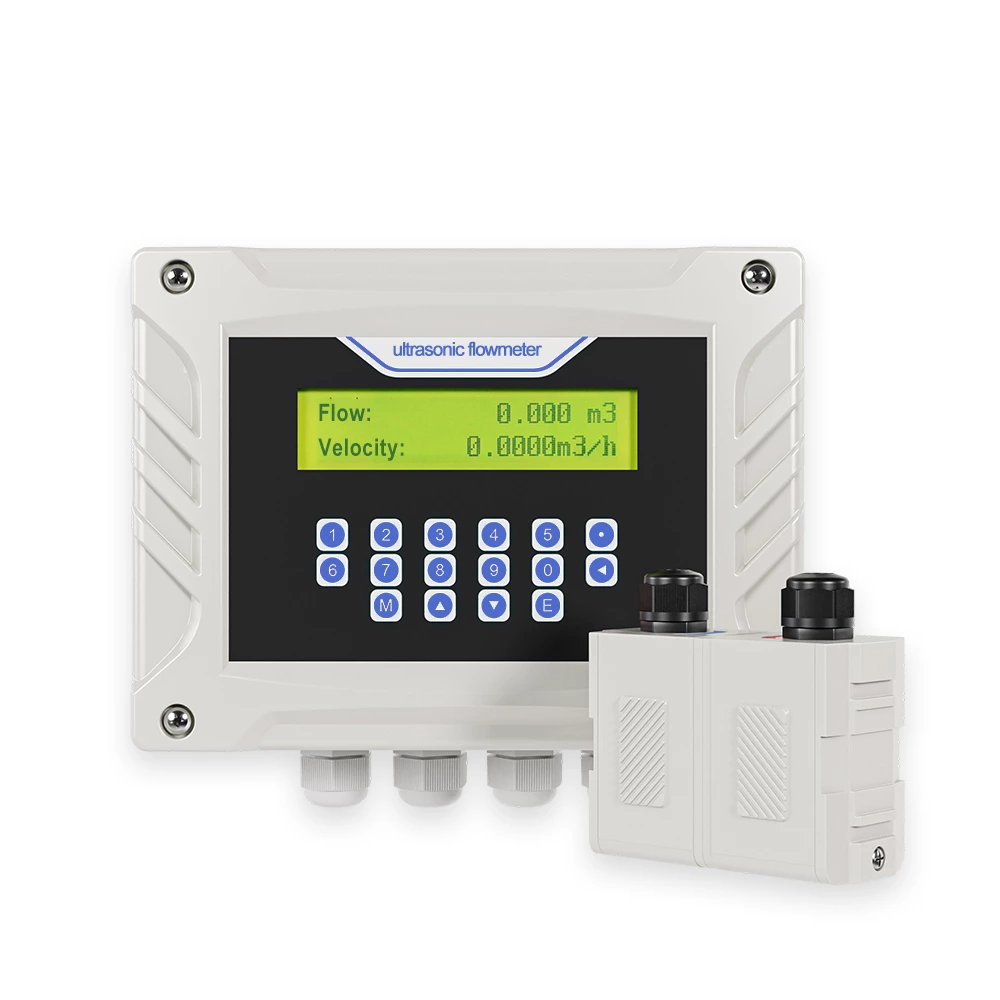
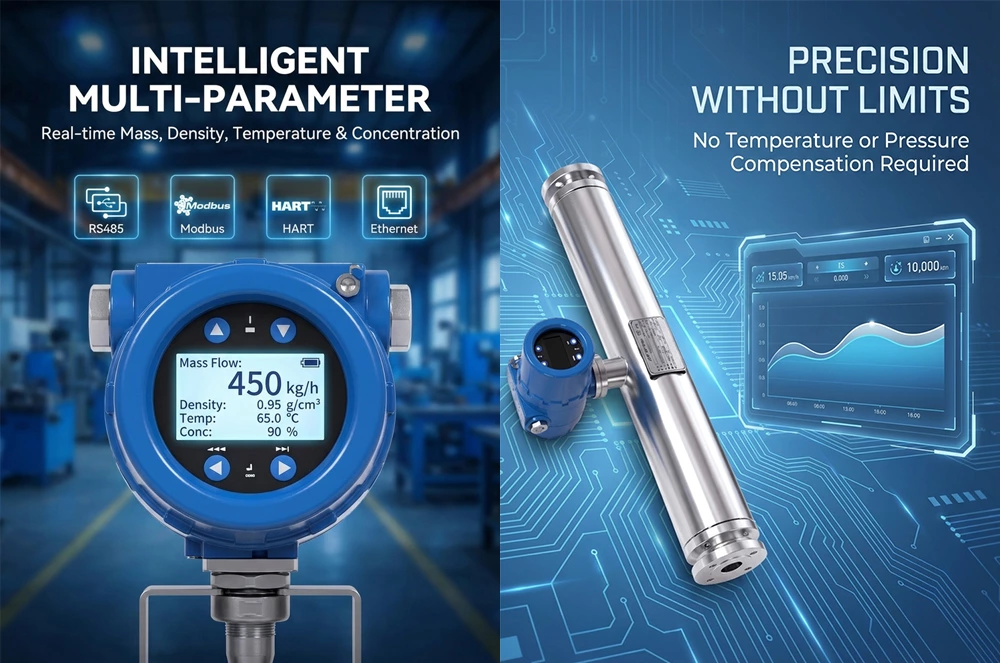
The Coriolis Mass Flow Meter is a new generation flow measurement instrument developed based on the Coriolis force principle. It directly measures the mass flow rate of fluid in a closed pipeline, while simultaneously measuring medium density and temperature.
The product complies with the implementation standard GB/T 31130-2014 Coriolis Mass Flow Meter.
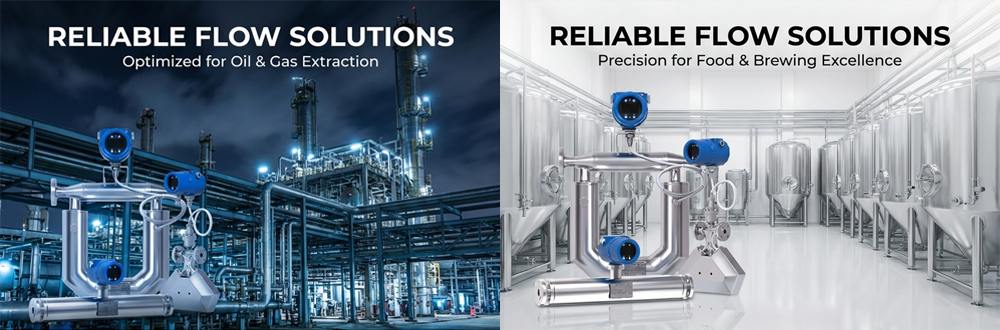
It is widely used in chemical, petroleum, food, pharmaceutical, paper making and other industrial fields where accurate and stable flow measurement is required.
Direct Mass Flow Measurement – The Coriolis mass flow meter directly measures true mass flow rate without relying on volume-based calculations, ensuring highly accurate industrial mass flow measurement.
Simultaneous Density and Temperature Measurement – Integrated density measurement and temperature monitoring allow real-time process control and concentration calculation.
Wide Measurement Range with High Accuracy – Designed for precise mass flow measurement across a wide operating range in demanding industrial applications.
No Straight Pipe Requirement – Unlike traditional flow meters, this Coriolis flow meter does not require upstream or downstream straight pipe sections, simplifying installation.
Suitable for High Viscosity and Slurry Media – Ideal for high viscosity liquid flow measurement, slurry flow measurement, and suspension media where conventional flow meters fail.
Online Concentration Monitoring – By combining density measurement with temperature data, the system enables solute concentration calculation in process industries.
Low Maintenance Industrial Design – No moving mechanical parts and reliable vibration-based measurement ensure long-term stability and reduced maintenance costs.
Applicable to Complex Industrial Media – Suitable for difficult-to-measure fluids in chemical, petroleum, pharmaceutical and food processing industries.
The Coriolis Mass Flow Meter operates according to the Coriolis force principle.
When a pipe rotates around a fixed point while fluid flows through it, the moving fluid particles generate inertial forces. Each particle of mass δm moving at velocity υ in a tube rotating at angular velocity ω produces:
The tangential acceleration generates the Coriolis force:
Fc = 2ωυδm
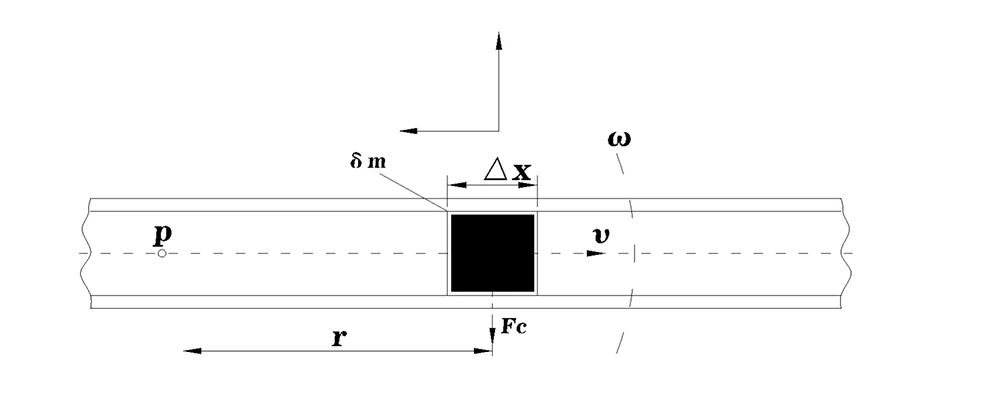
Since the Coriolis force is proportional to the mass flow rate, measuring this force allows direct mass flow measurement.
In practical applications, the flow meter does not rotate mechanically but uses tube vibration. A bent tube is fixed at both ends, and vibration at its natural frequency is applied.
-
When no fluid flows, both sides of the tube vibrate synchronously without phase difference.
-
When fluid flows, Coriolis forces are generated in opposite directions on the two sides of the tube.
-
This causes a twist and produces a phase difference between the two sides.
-
The phase difference is proportional to the mass flow rate.
By converting the Coriolis force into a measurable phase difference, the meter directly determines the mass flow rate.
The Coriolis Mass Flow Meter is widely used in industrial process control and precision mass flow measurement applications, including:
-
Chemical Industry Flow Measurement – Accurate measurement of acids, solvents, chemical solutions and high viscosity media.
-
Petroleum and Oil Industry – Mass flow measurement of crude oil, refined products, fuels and hydrocarbons.
-
Food and Beverage Processing – Hygienic mass flow and density measurement for liquid food materials and additives.
-
Pharmaceutical Manufacturing – Precise flow control and concentration monitoring in pharmaceutical production lines.
-
Paper and Pulp Industry – Slurry and suspension flow measurement in pulp processing systems.
-
High Viscosity and Slurry Applications – Industrial measurement of fluids that are difficult to measure using conventional volumetric flow meters.
-
Process Control Systems – Real-time mass flow and density monitoring for automated industrial control systems.
 Model Selection