-
Optional Functions & Expansion
Heat and cooling energy totalizing with temperature sensors
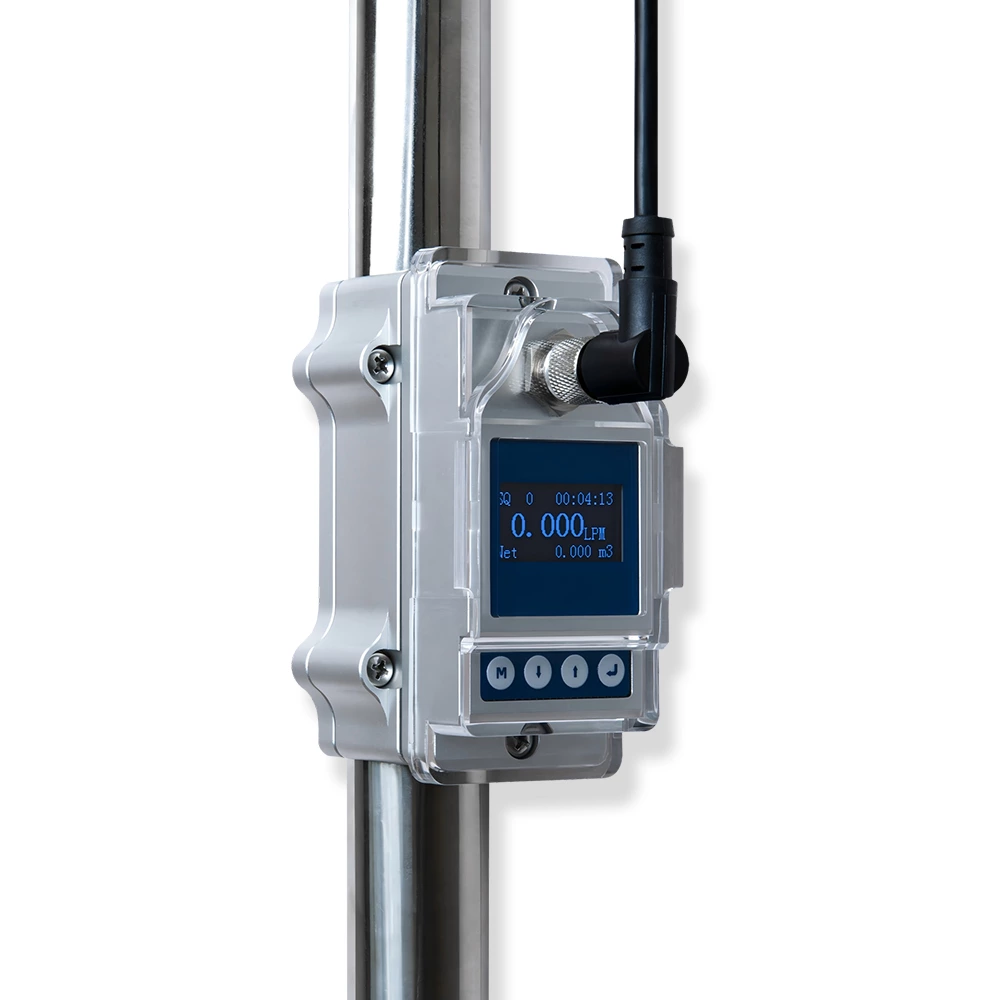
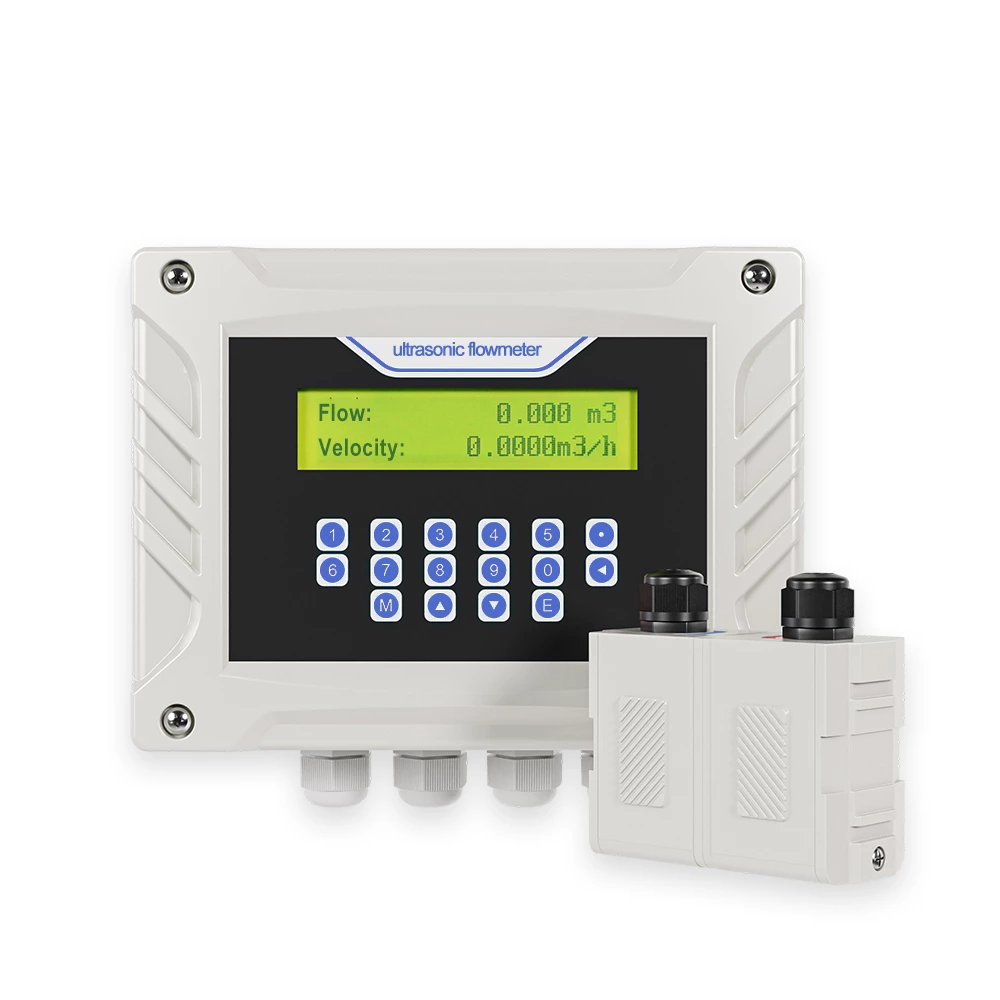
Fixed installation with wall-mounted remote transmitter
Suitable for flow monitoring, energy analysis, and industrial automation systems
-
Measuring principle
The ultrasonic flowmeter operates based on the Transit-Time Difference Method. Two ultrasonic sensors are mounted upstream and downstream to alternately transmit and receive ultrasonic pulses through the fluid.
When the ultrasonic signal travels with the flow, the transit time is shorter; when traveling against the flow, the transit time is longer. The difference between these two transit times is proportional to the fluid velocity.
The average flow velocity and volumetric flow rate are calculated using the following relationships:
-
tdu: Transit time from upstream sensor to downstream sensor
-
tud: Transit time from downstream sensor to upstream sensor
-
L: Acoustic path length
-
X: Axial distance between sensors
-
θ: Acoustic propagation angle
-
vi: Average flow velocity
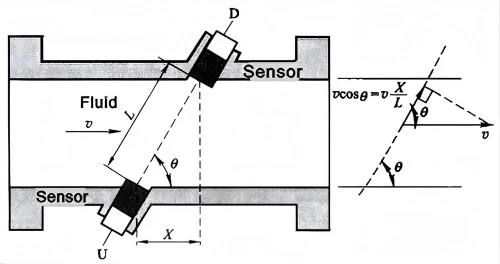
Based on these parameters, the system calculates instantaneous flow rate and totalized flow accurately and continuously.
-
Installation Types
Clamp-on Ultrasonic Flowmeter
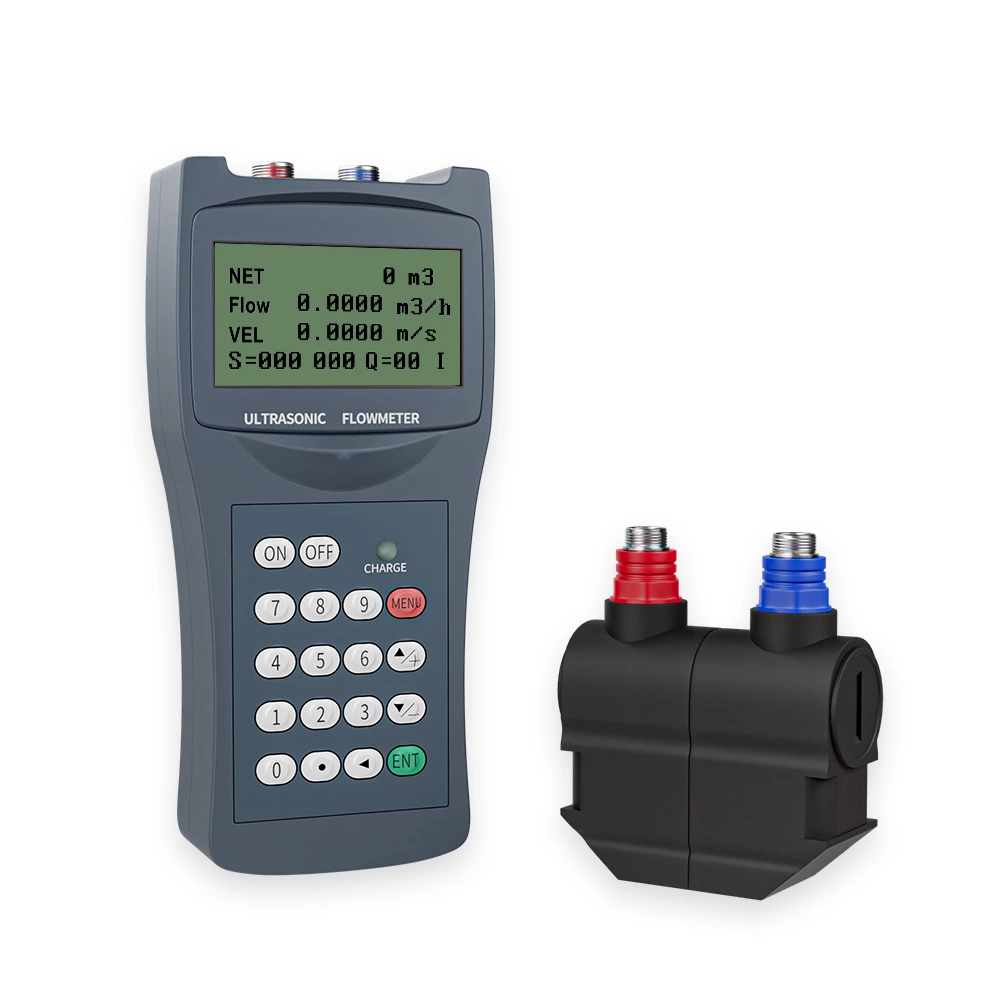
Clamp-on sensors are mounted directly on the outer surface of the pipeline, requiring no pipe cutting or process interruption. Installation is fast, simple, and completely non-intrusive, reflecting the ease of use and flexibility of ultrasonic flow measurement technology.
Insertion Ultrasonic Flowmeter
Insertion-type ultrasonic flowmeters can also be installed without shutting down the pipeline. Using special tools, sensors are inserted into the pressurized pipe. Since the ultrasonic signal travels only through the measured medium, the measurement is not affected by pipe wall thickness or lining materials, ensuring high accuracy.