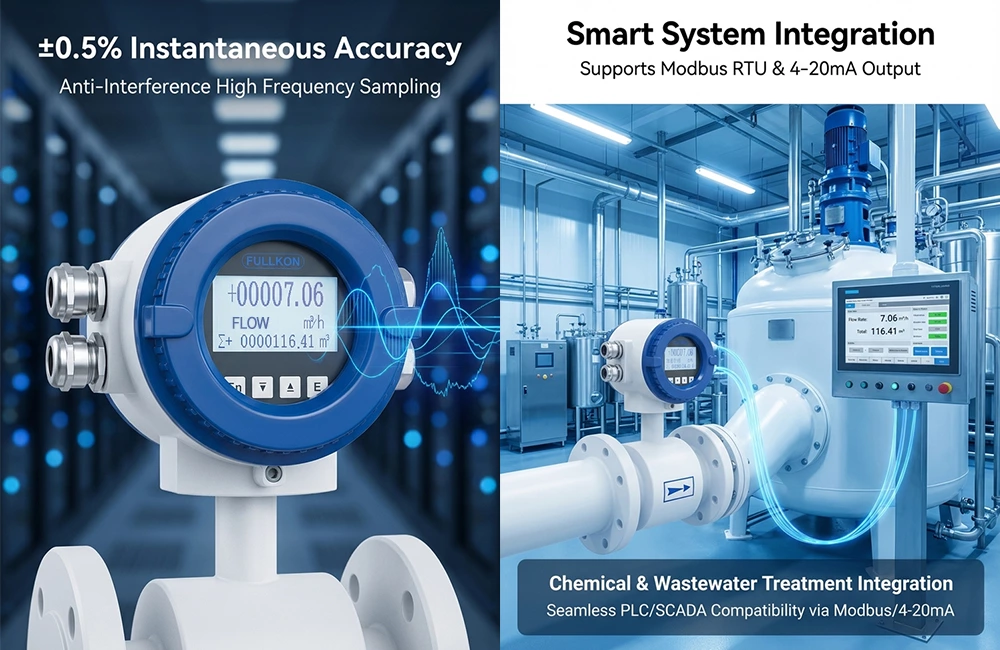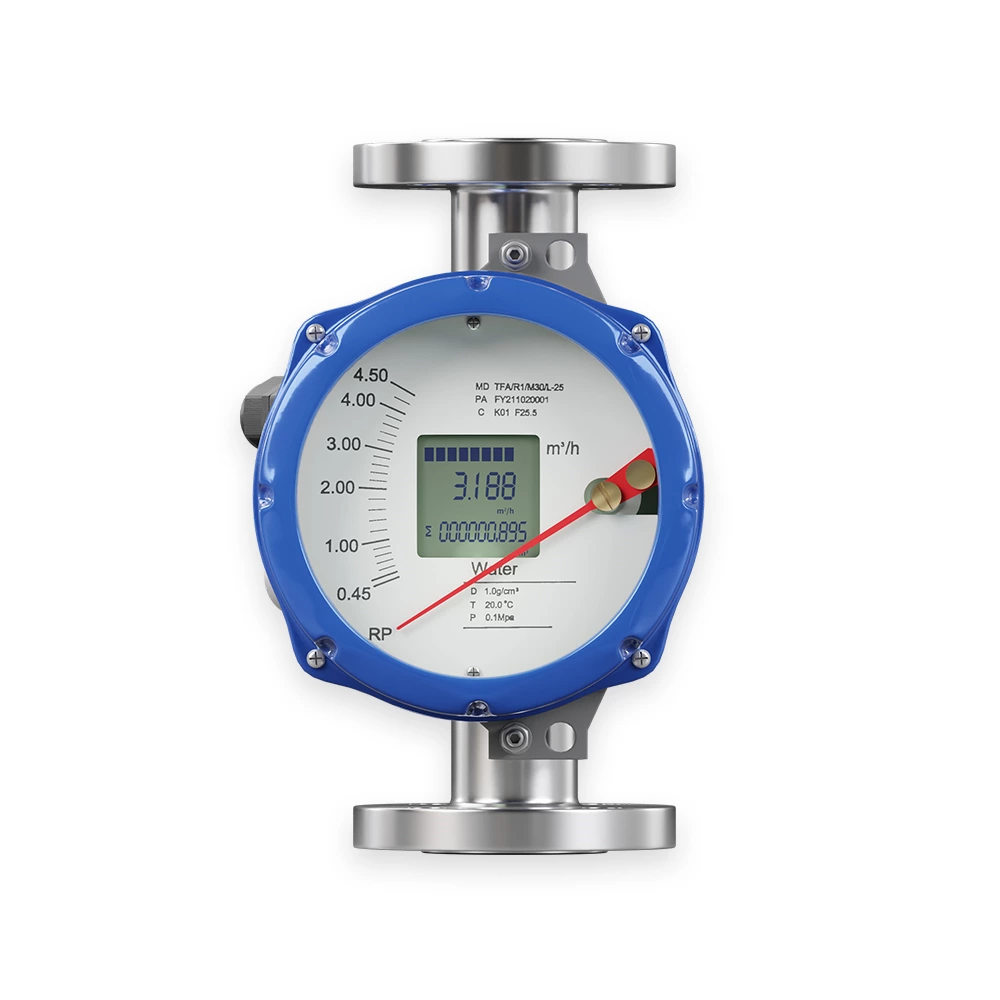
-
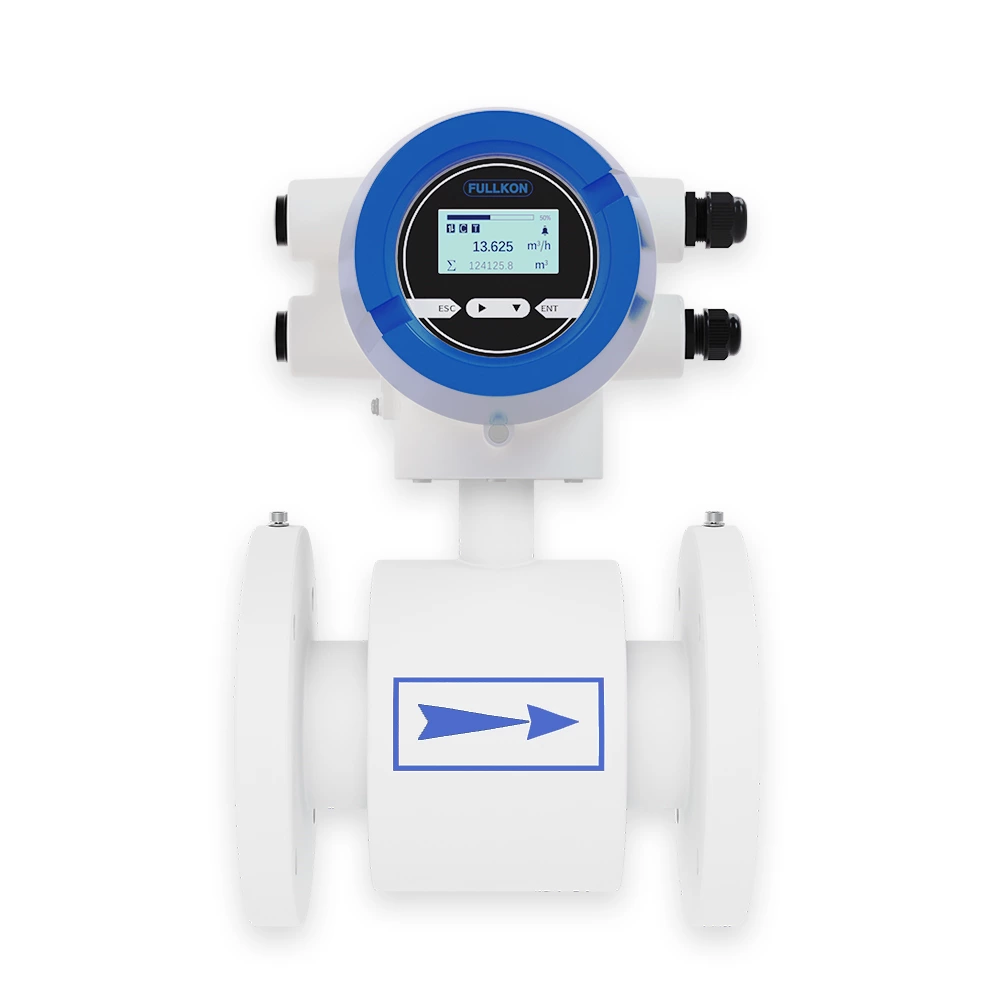
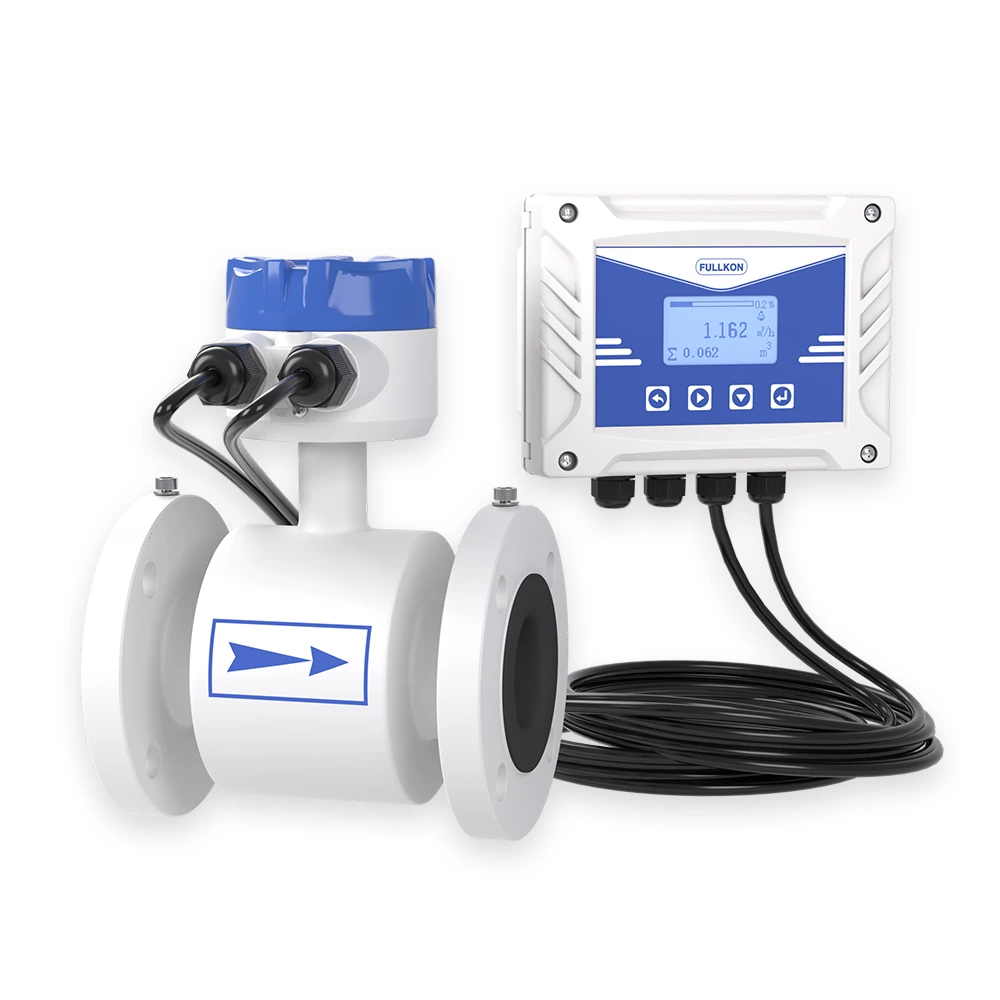
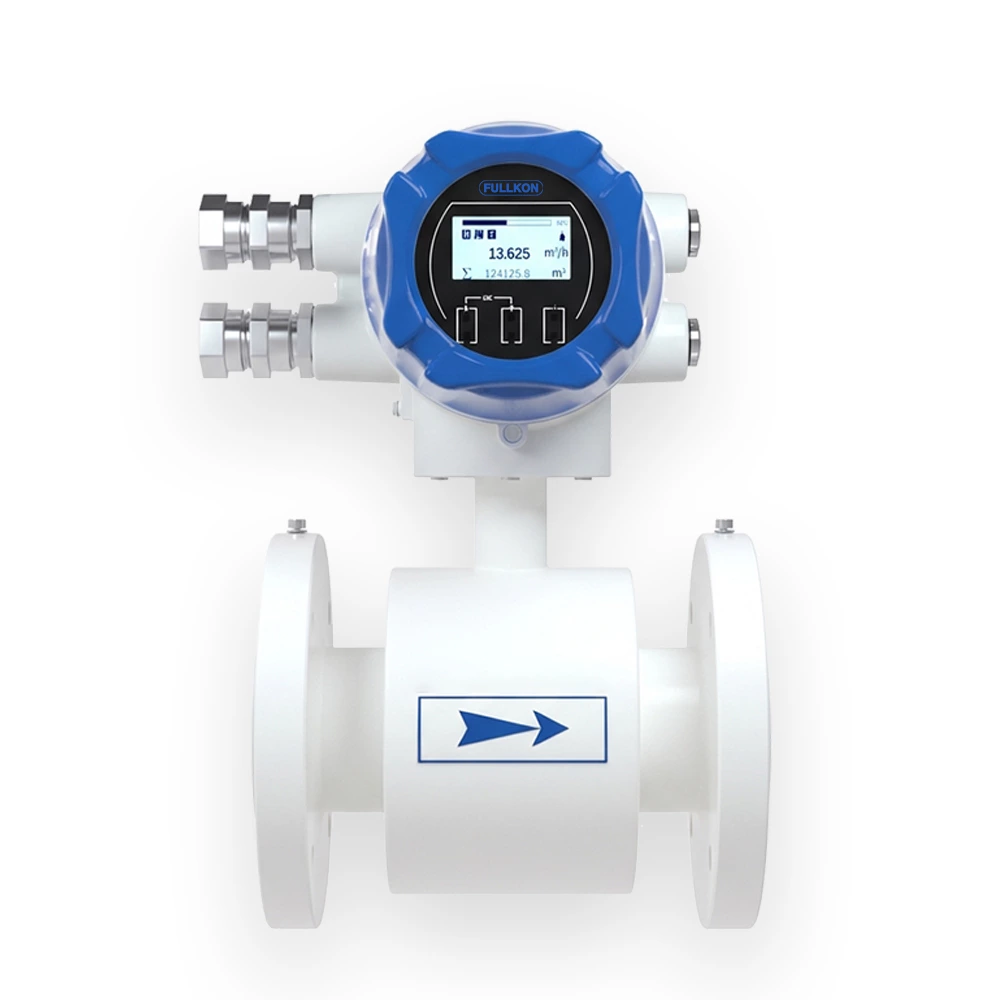
Technical Specifications
| Input | |||
| Measured variable | Real-time measurement and flow accumulation of instantaneous flow, flow velocity, mass flow (when density remains constant) | ||
| Velocity range | Typically range: 0.5m/s~5m/s | ||
| Nominal diameter | DN10~DN300 | ||
| Range ratio | 1:10 | ||
| Output and alarm | |||
| Current output | Function | Flow velocity, volume flow (under constant fluid density) | |
| Range | Range | (4~20)mA | |
| Max. | 20mA | ||
| Min. | 4mA | ||
| Active | For terminals IOUT, ICOM | ||
| Passive | For terminals IVee, IOUT, support ( 12 ~ 24) VDC external power supply | ||
| Load | ≤ 750Ω | ||
| Pulse/frequency output | Function | Can be configured either pulse or frequency output (Selection via the menu) | |
| Pulse output | Output pulse width | Output pulse width: 0.1ms~400ms , optional automatic or manual mode, manual mode can be set | |
| Pulse coefficient | 0.001L~10000.000L | ||
| Frequency output | Scope | 0Hz~10000Hz | |
| Passive | The two-position red dip switch is turned to the OFF position . | ||
| Active | Turn the two-position red dip switch to the ON position | ||
| Communications | RS485, MODBUS-RTU communication protocol | ||
| Alarm | Empty pipe alarm, excitation alarm, upper limit alarm, lower limit alarm | ||
| Power supply | |||
| Power supply | AC: 85V~264V , 50Hz~60Hz | ||
| DC: 18V~28V | |||
| Power consumption | ≤8W | ||
| Cable entries | M20*1.5 | ||
| Performance specifications | |||
| Reference operating conditions | Medium: water | ||
| Temperature: 20℃ | |||
| Pressure: 0.1MPa | |||
| Installation requirements: Inlet run≥10DN; Outlet run≥5DN | |||
| Accuracy | ±0.5% of measured value (flow rate≥0.5m/s) | ||
| ±0.5% of measured value ±2mm/s (flow rate < 0.5m/s) | |||
| Repeatability | 0.16% | ||
| Process | |||
| Medium temperature range | CR liner: -10℃~70℃ | ||
| PU liner: -10℃~60℃ | |||
| PTFE liner: -10℃~120℃ | |||
| F46 liner: -10℃~120℃ | |||
| Nominal pressure(customized high-pressure versions available) | DN10~DN250: PN<1.6MPa | ||
| DN300: PN<1.0MPa | |||
| Note: (For specific model differences, refer to nameplate. High-pressure versions can be customized) | |||
| Conductivity | ≥20μS/cm | ||
| Environment | |||
| Ambient temperature | -20℃~55℃ | ||
| Storage temperature | -40℃~55℃ | ||
| Protection level | IP65 | ||
-
Applications
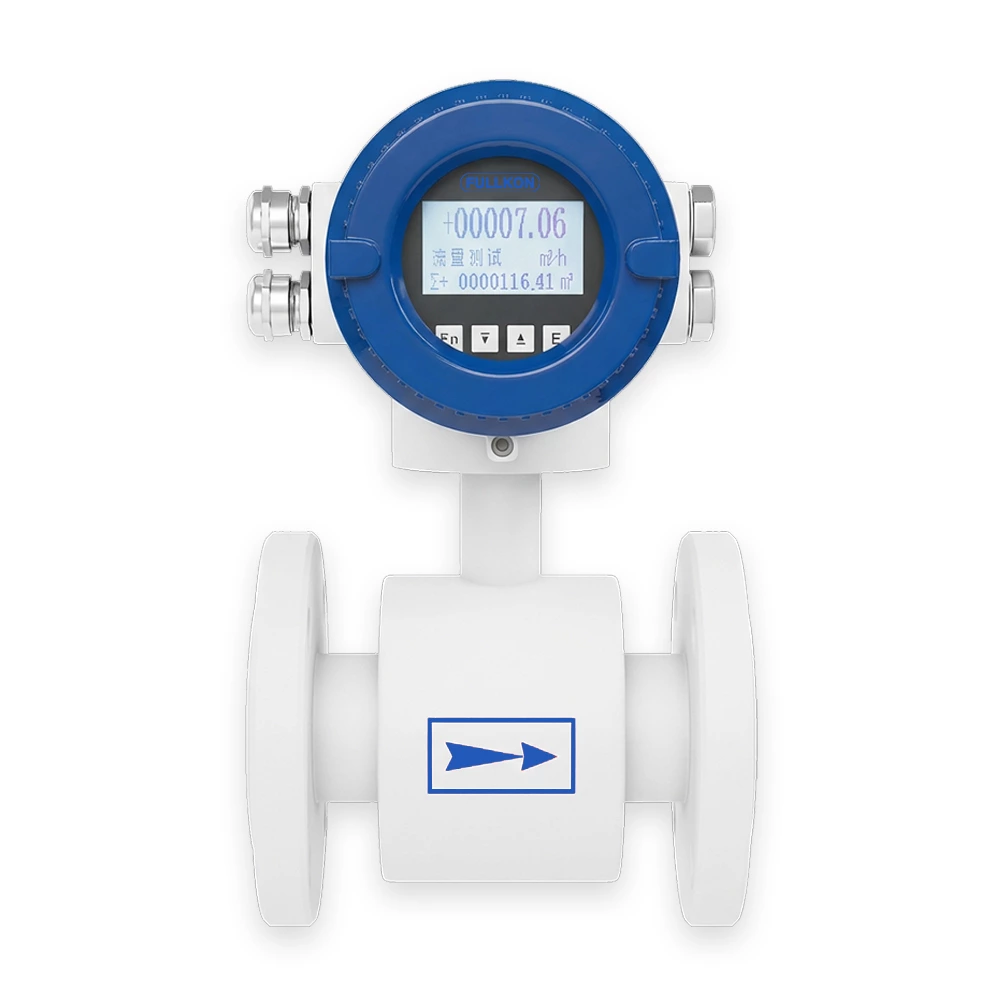
The Slurry Electromagnetic Flow Meter is widely used in industries requiring accurate slurry flow measurement and high solid content flow monitoring:
Pulp & Paper Industry
-
Pulp flow measurement
-
High-consistency fiber slurry monitoring
-
Paper stock flow control
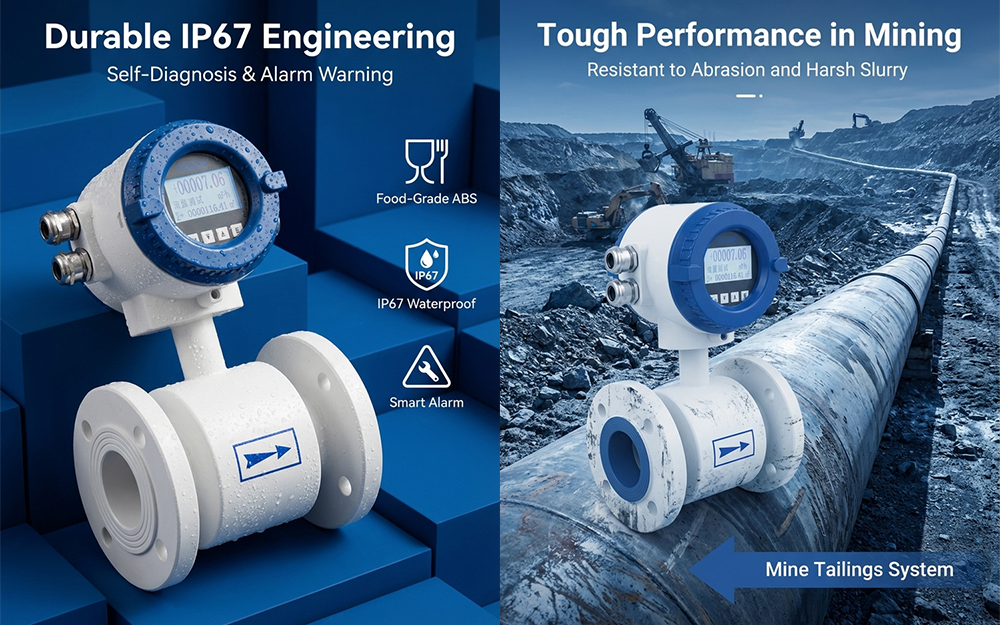
Mining Industry
-
Ore slurry flow measurement
-
Tailings monitoring
-
Mineral processing pipelines
Coal & Energy Industry
-
Coal-water slurry measurement
-
Sludge flow monitoring
-
Desulfurization slurry systems
Wastewater & Environmental Industry
-
Mud and sludge flow measurement
-
Industrial wastewater treatment
-
Sediment transport monitoring
Chemical Industry
-
Liquid-solid mixture measurement
-
Reactor feed control
-
Abrasive chemical slurry monitoring
-
Measuring principle
The slurry electromagnetic flowmeter operates according to Faraday’s Law of Electromagnetic Induction.
Two electromagnetic coils generate a magnetic field perpendicular to the flow direction. When a conductive slurry flows through the magnetic field, an induced electromotive force (E) is generated between two electrodes installed on the tube wall.
The induced voltage is proportional to:
-
Flow velocity (V)
-
Magnetic flux density (B)
-
Electrode spacing (D)
The relationship is expressed as:
E = K × B × V × D
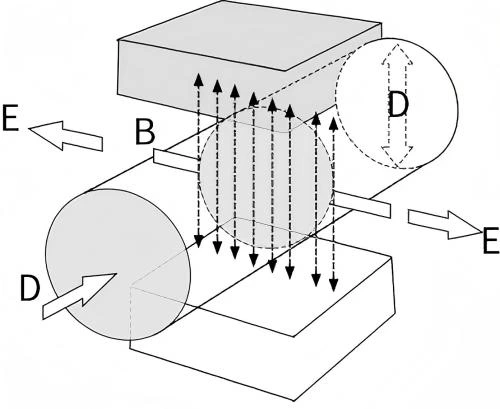
Where:
-
E – Induced electromotive force
-
K – Meter tube constant
-
B – Magnetic flux density
-
V – Average flow velocity
-
D – Electrode spacing
The induced voltage signal is processed through analog and digital circuits, and the converter displays both instantaneous flow and totalized flow.
The measured medium must have electrical conductivity above the minimum threshold specified in the technical parameters.
-
Key Technologies for Slurry Measurement
To ensure accurate slurry flow measurement in harsh environments, the meter incorporates advanced targeted technologies:
Hybrid Low- and High-Frequency Excitation Technology
-
Combines low-frequency and high-frequency excitation signals
-
Suppresses low-frequency baseline drift
-
Reduces high-frequency particle noise
-
High-frequency excitation up to 75Hz enables rapid data sampling
-
Multi-parameter software filters eliminate interference
This design significantly improves stability and reliability in high solid slurry conditions.
Advanced Slurry Noise Suppression
Slurry flow generates at least five different types of noise with distinct characteristics. The system:
-
Establishes a slurry flow signal model
-
Applies multi-stage digital filtering
-
Uses wavelet transform processing
-
Implements dynamic approximation algorithms
-
Reconstructs adaptive slurry flow signal models
This enables accurate extraction of the true flow signal even in low signal-to-noise ratio environments.
Enhanced Signal-to-Noise Ratio (SNR)
Optimized sensor structure and electrode placement combined with advanced signal processing algorithms:
-
Improve signal stability
-
Reduce turbulence interference
-
Minimize deviation caused by entrained gas
-
Ensure reliable measurement under complex slurry conditions
Wear-Resistant Construction
Designed for abrasive slurry applications such as:
-
Coal-water slurry
-
Mining ore slurry
-
Industrial sludge
Optional wear-resistant materials:
-
Polyurethane (PU) lining
-
Tungsten carbide reinforced electrodes
This extends service life and reduces maintenance frequency in high-abrasion environments.