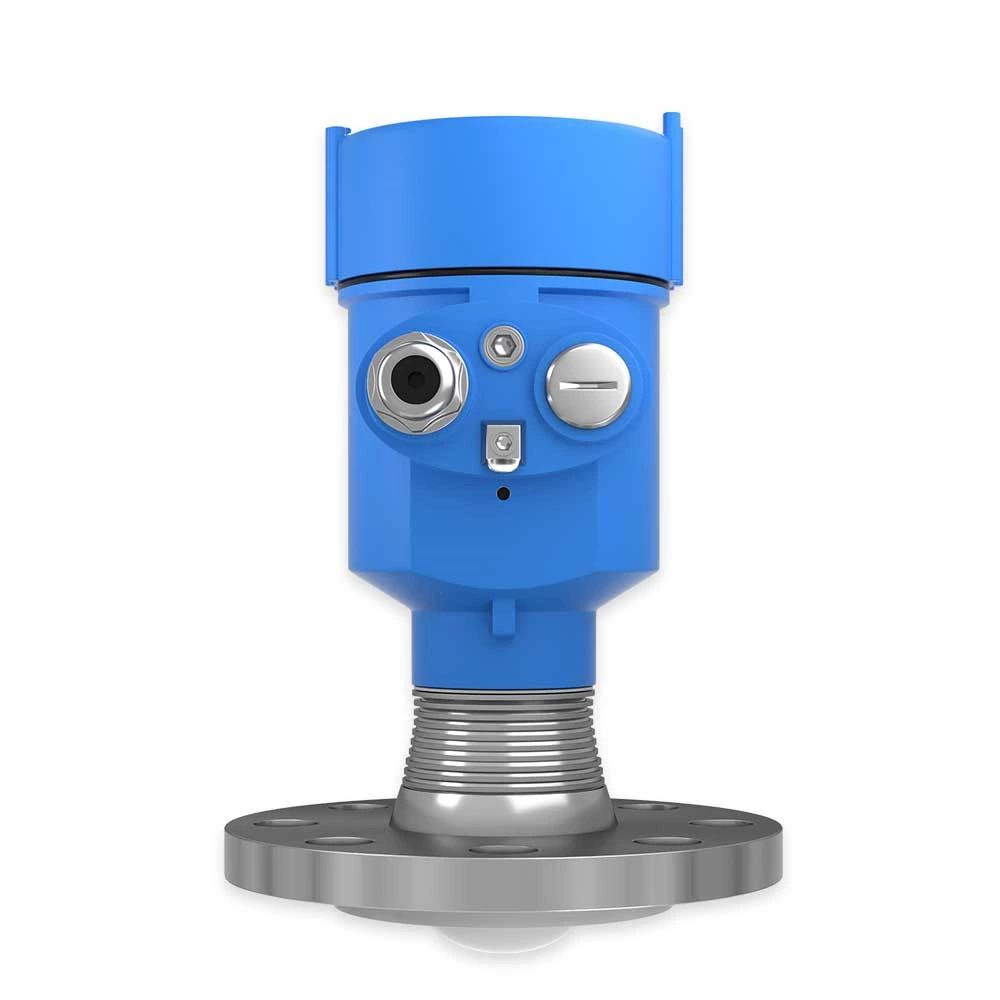
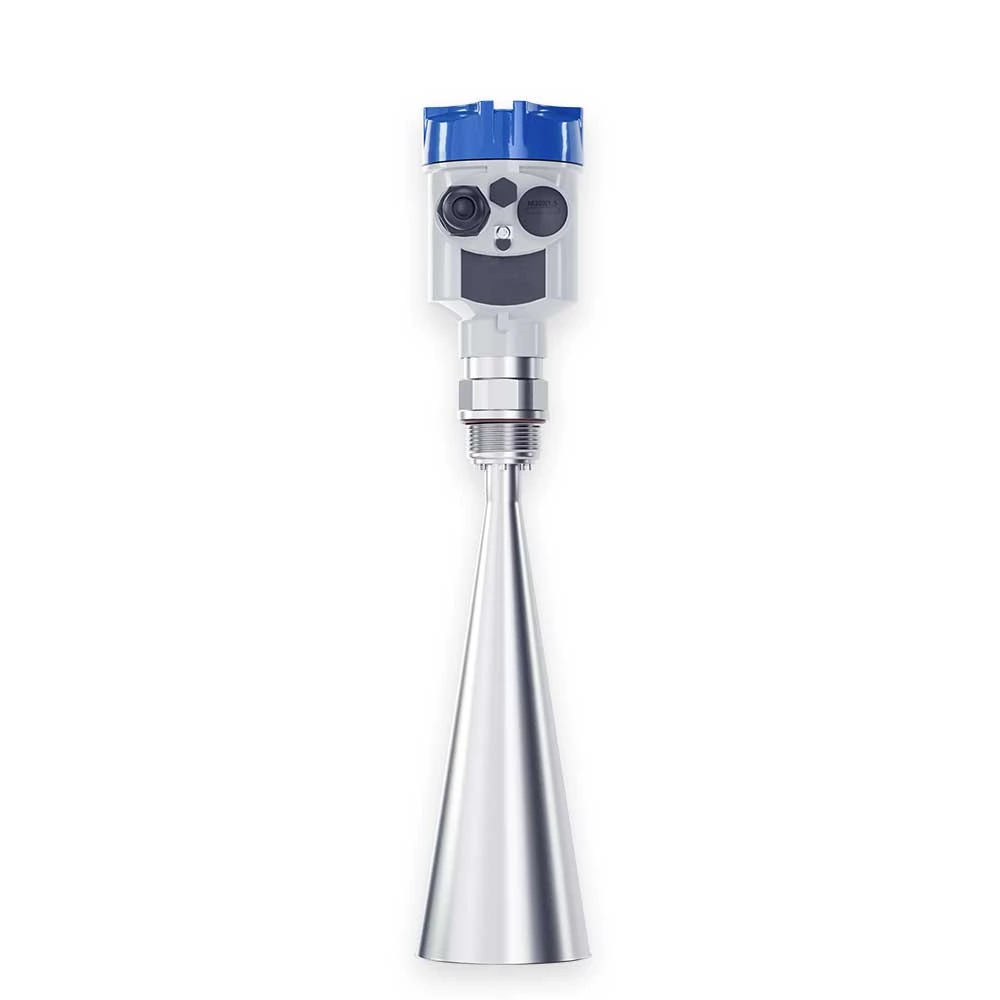
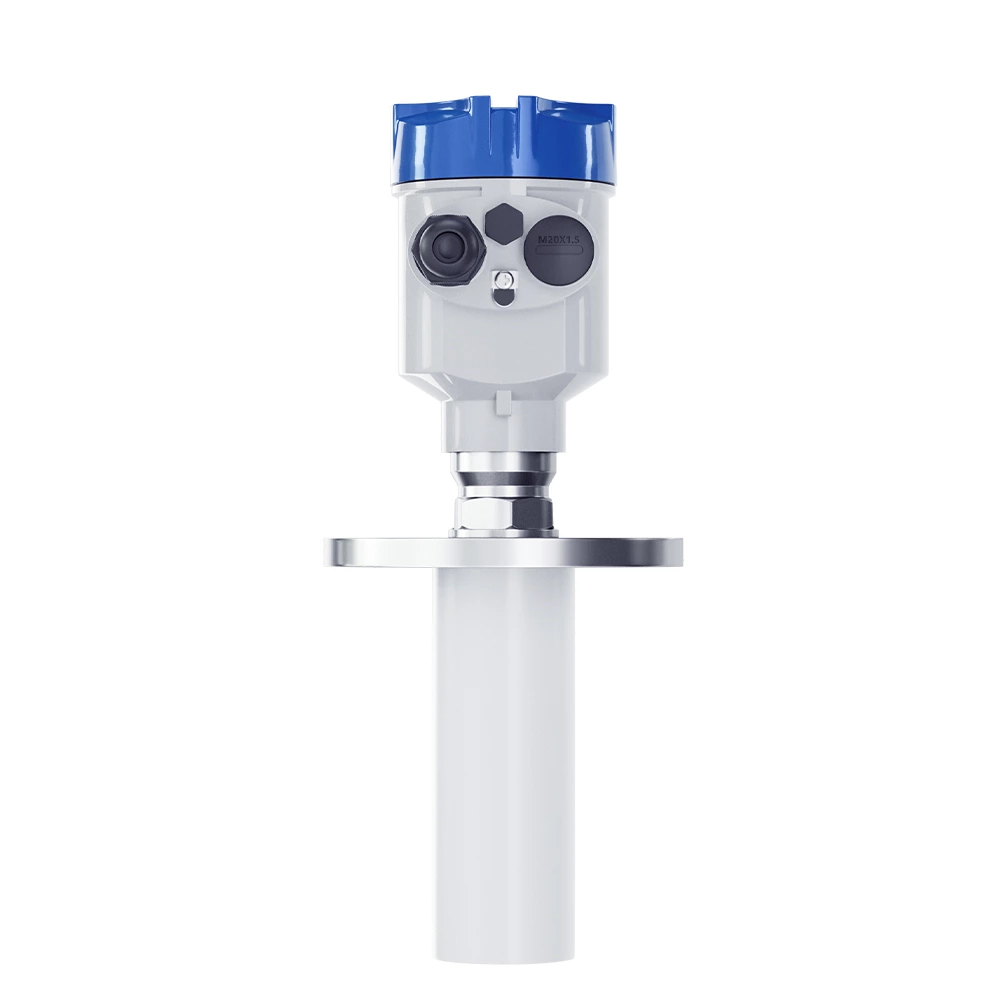
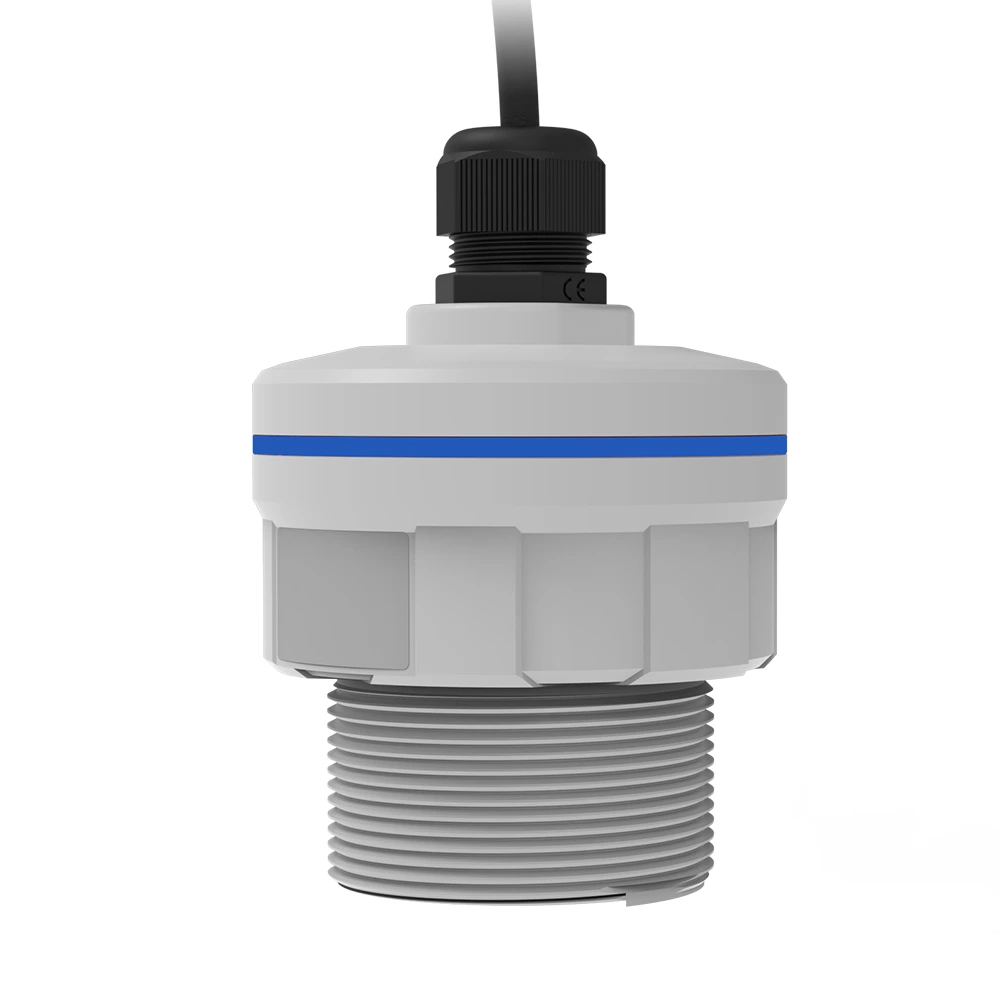
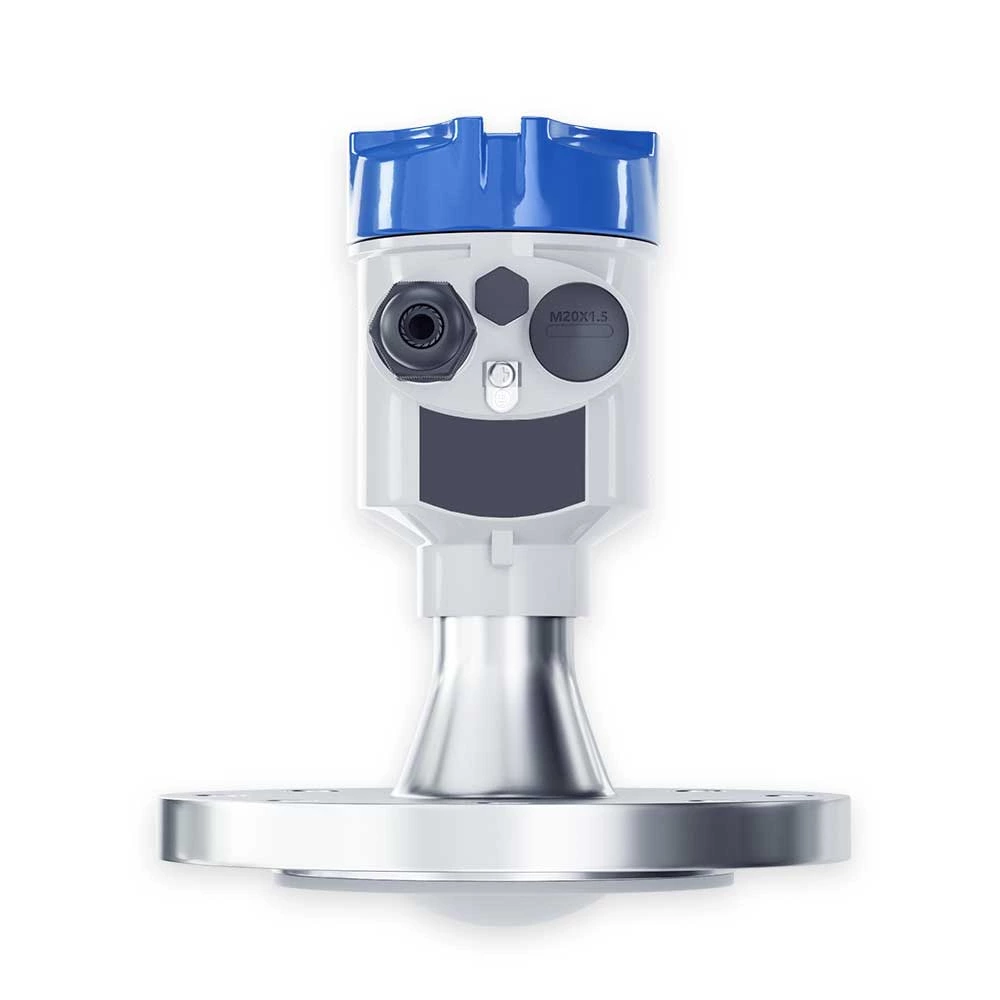
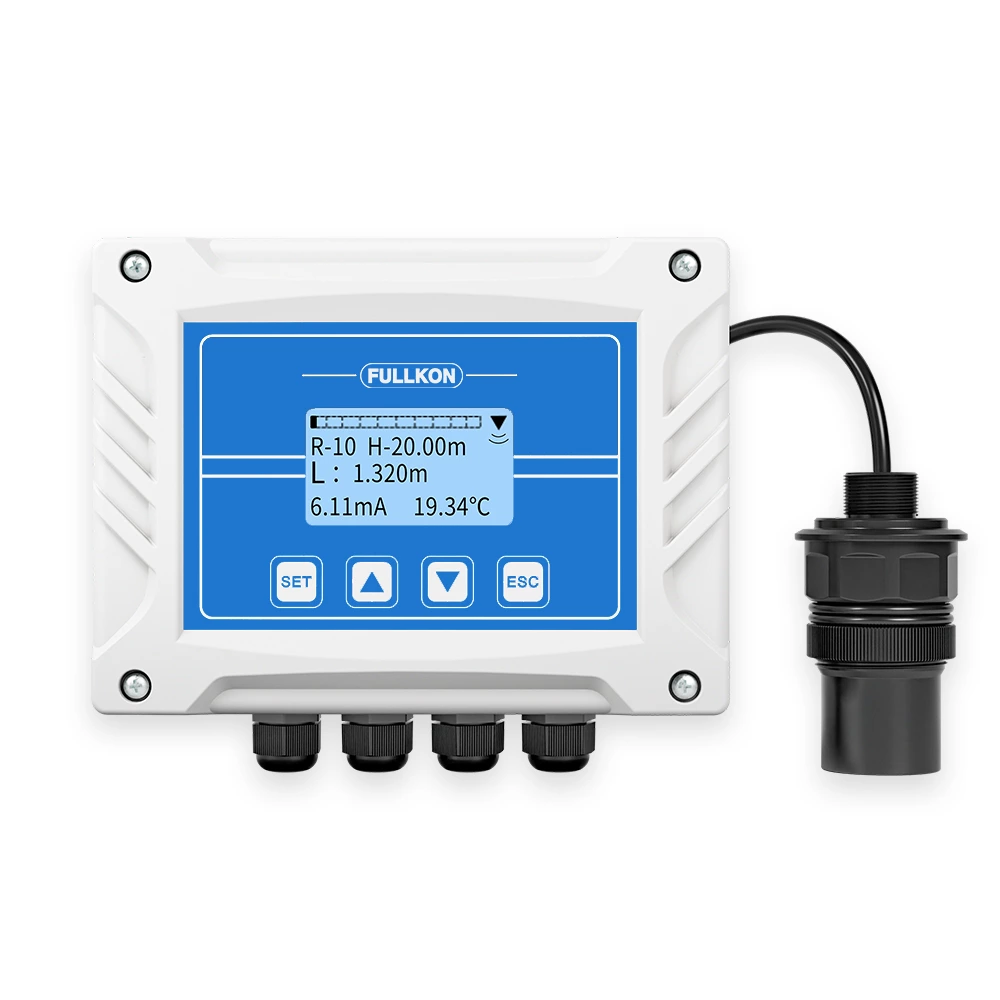
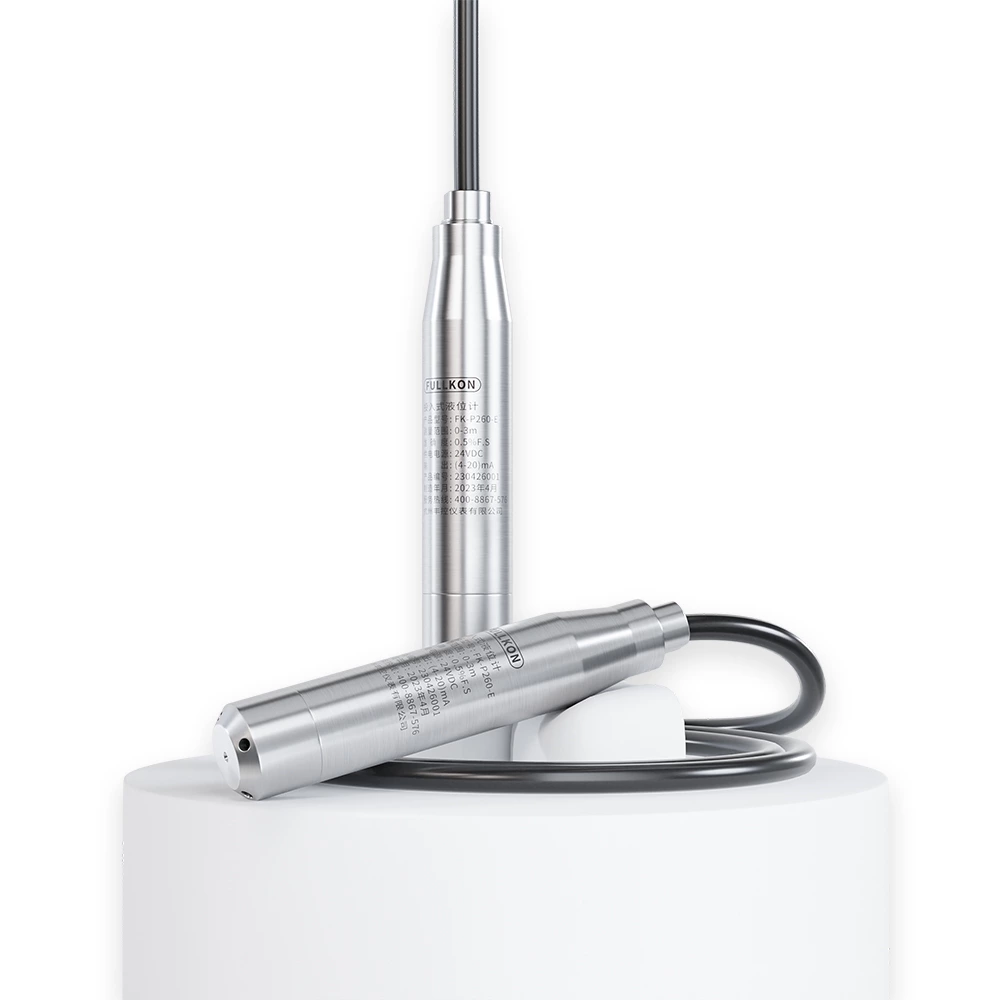
The WSR500-E is a high-performance member of the 80G FMCW radar series (76–81 GHz), designed for non-contact continuous level measurement in demanding industrial applications. Its shorter wavelength and higher frequency enable excellent performance on bulk solids, powders, and challenging liquids, even under extreme dust, high temperatures (up to +200°C), or complex vessel geometries. The transmitter supports both 4-wire and 2-wire configurations, uses lens antenna technology for focused transmission/reception, and offers versatile mounting (thread or flange) for easy integration. It eliminates issues like corrosion, wear, or maintenance common in contact-based sensors, making it ideal for reliable, long-term operation in silos, tanks, hoppers, and process vessels.
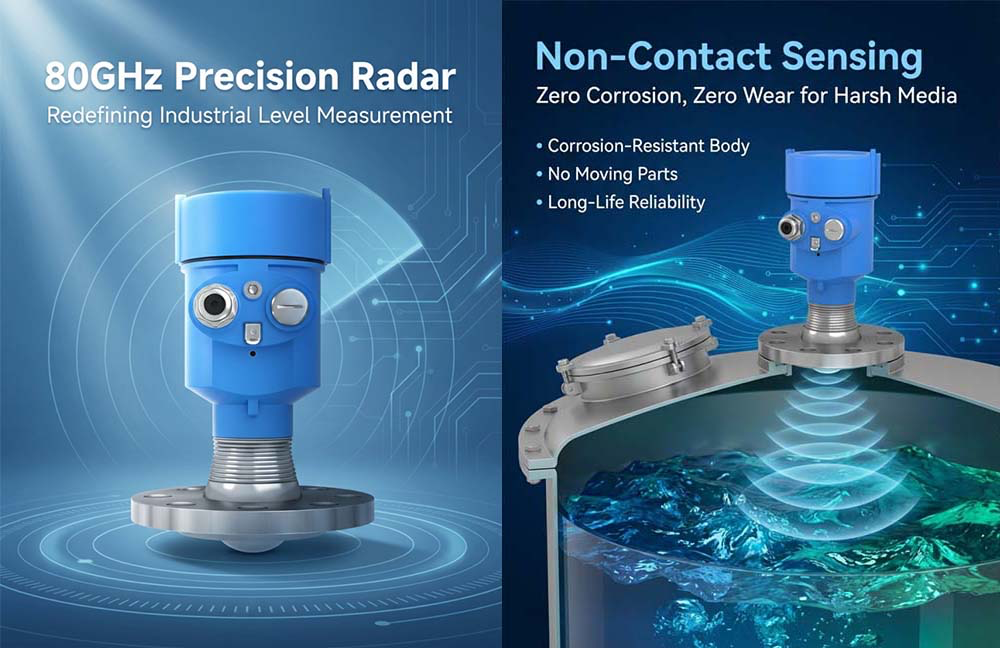
Non-contact radar – avoids direct medium contact, preventing corrosion/abrasion
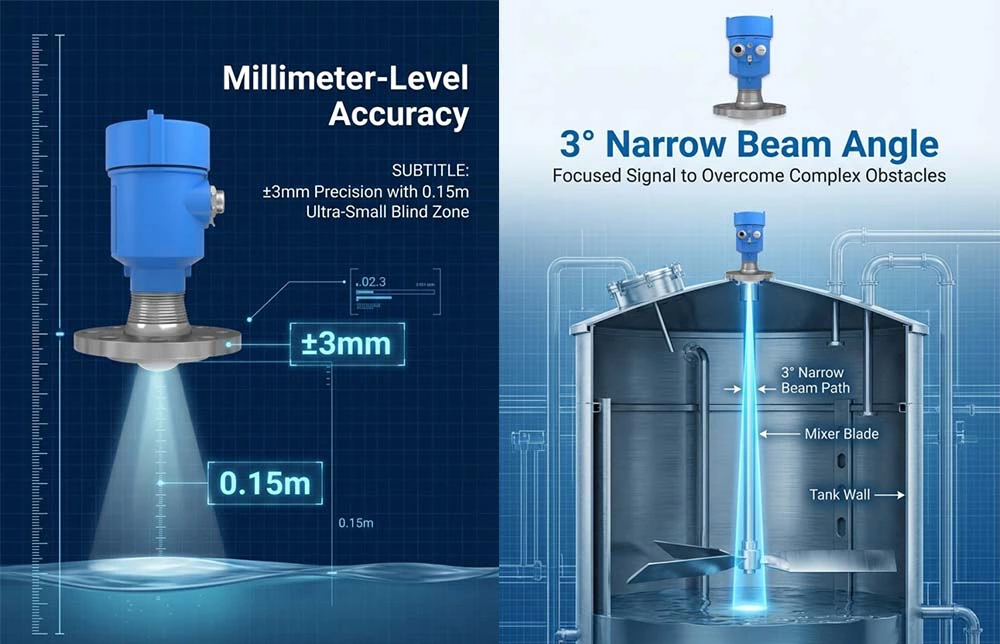
76–81 GHz FMCW radar + 5 GHz bandwidth – exceptional resolution & ±3 mm accuracy
Minimal blind zone 0.15 m – maximizes effective measuring span
Ultra-narrow 3° beam angle – minimizes false echoes from agitators, structures, or obstacles
Lens antenna optimized for dusty/high-temp solids applications
Robust in extreme conditions: heavy dust, +200°C temperature, vapors, foam
Intuitive menu & HMI for fast, user-friendly interaction
Bluetooth app support – wireless commissioning, configuration, and diagnostics via phone (safer & quicker on-site)
Flexible installation: thread or flange process connections
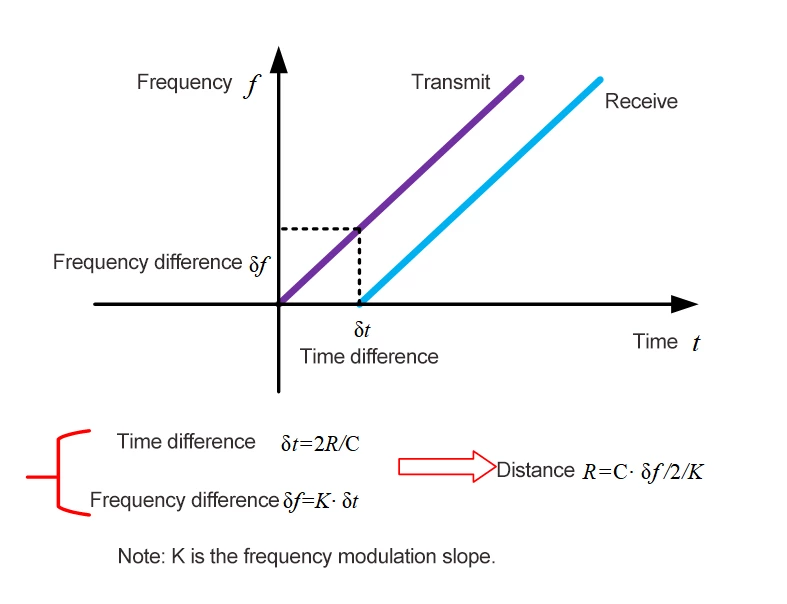
Operates on Frequency Modulated Continuous Wave (FMCW):
The radar emits a continuous, linearly frequency-modulated electromagnetic wave from the top of the vessel. The wave reflects off the medium surface and returns to the receiver. The frequency difference (δf) between transmitted and received signals is proportional to the distance (R) to the surface:
R = C × δf / (2 × K)
(C = speed of light, K = known modulation slope).
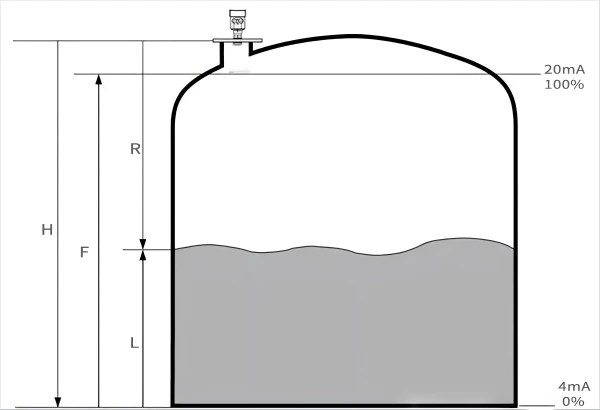
The material level height (L) is then calculated as: L = H – R
(where H is the known installation height/total vessel height, R is the empty distance/air gap).
This FMCW method provides stable, accurate readings independent of medium density, dielectric constant, temperature, or pressure variations.
Tailored for challenging bulk solids and process liquids:
- Powders, granules, pellets (cement, coal, grain, lime, ores, fly ash, fertilizers, plastics)
- High-dust silos, bunkers, hoppers, storage bins
- High-temperature processes & vessels (up to +200°C)
- Low dielectric or angled/sloped materials
- Chemical tanks with vapors, steam, or agitation
- Industries: cement & building materials, mining & aggregates, power generation, food & grain handling, chemicals, metallurgy
Replaces lower-frequency radars, ultrasonics, or invasive sensors in dust-laden, hot, or interference-heavy environments, ensuring stable, low-maintenance level monitoring for inventory, process optimization, and safety.
Why Choose the W500-E 80G Radar?
Combining millimeter-wave precision, unmatched environmental toughness, and modern Bluetooth-enabled ease of use, the W500-E delivers reliable non-contact level measurement where traditional technologies fall short – perfect for solids-focused and harsh industrial demands.
 Model Selection